
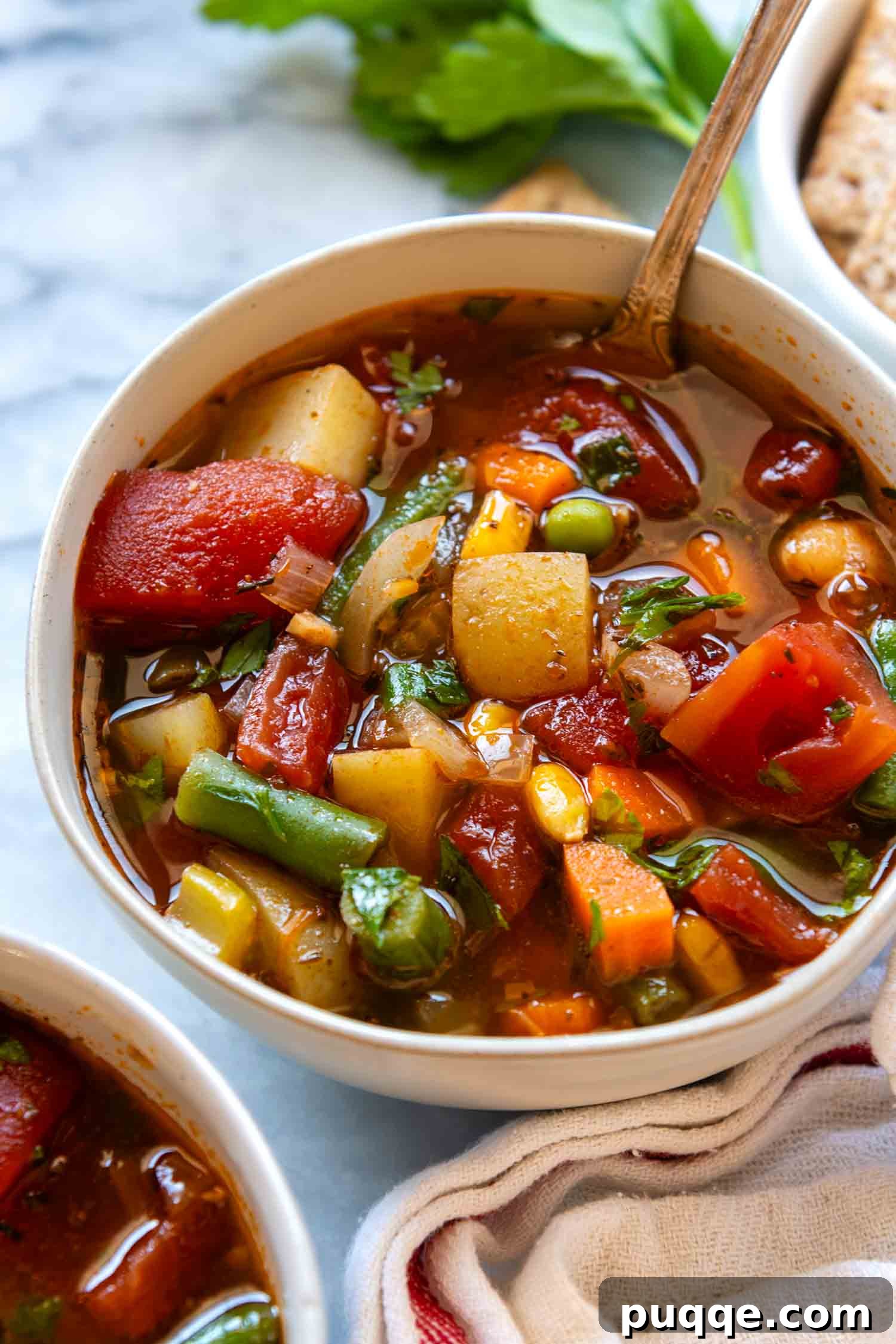
Are you craving a bowl of warmth that’s both nourishing and bursting with flavor? If you’ve grown weary of bland, uninspired vegetable soups, prepare for a culinary revelation! This easy-to-follow, homemade gluten-free vegetable soup recipe is designed to awaken your tastebuds and bring comforting joy to your table. It captures the essence of classic, hearty, homemade goodness, reminiscent of a cherished family recipe, but with a special touch that elevates every spoonful. Packed with a delightful medley of chunky, vibrant vegetables—think tender potatoes, wholesome beans, sweet carrots, crisp corn, green peas, and juicy tomatoes—this soup is a testament to how simple ingredients can create extraordinary taste.
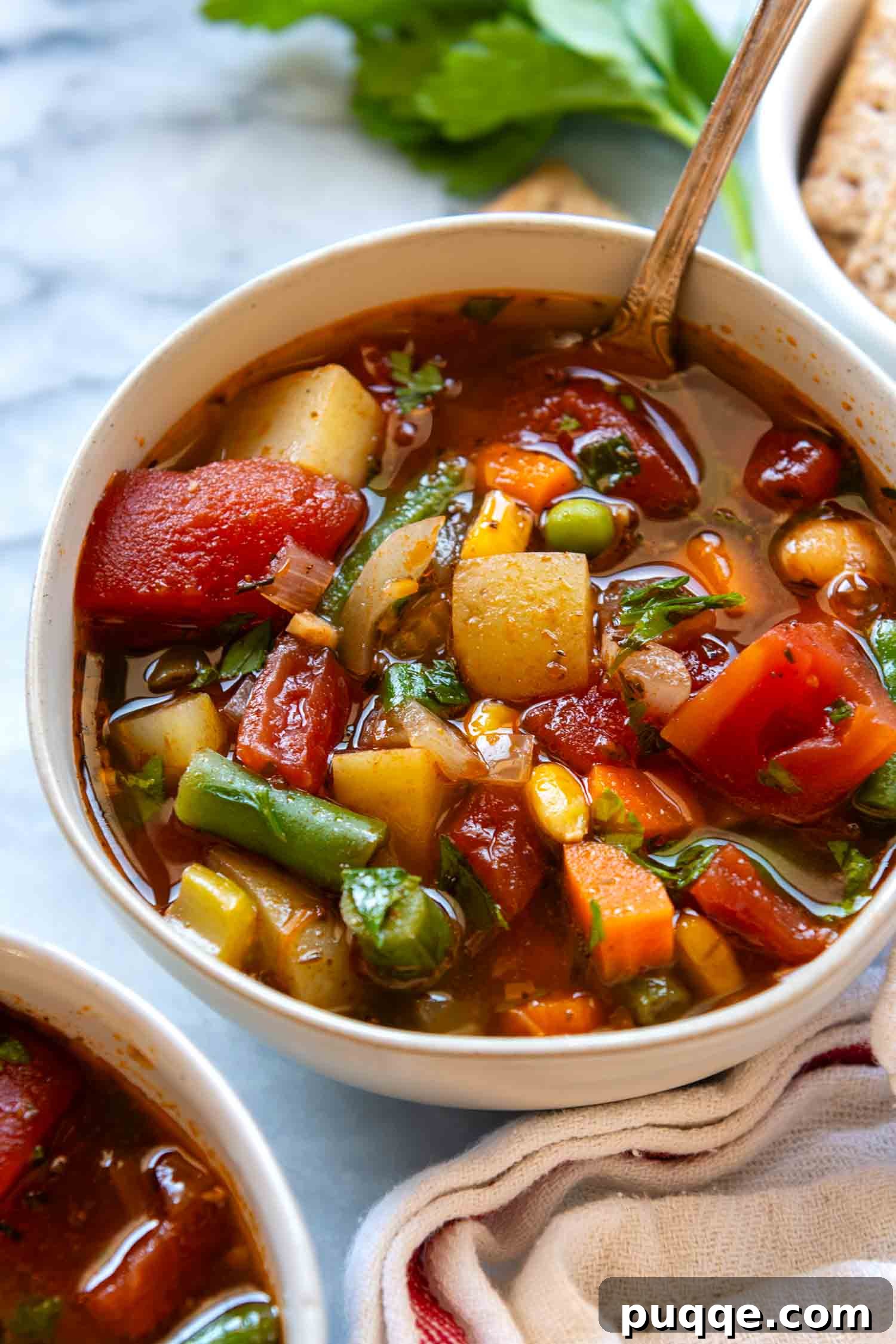
The Ultimate Gluten-Free Vegetable Soup Recipe: A Hearty & Flavorful Classic
Crafting an exceptionally flavorful vegetable soup that is also entirely gluten-free is one of those culinary triumphs that requires minimal adjustments. Unlike many recipes that need significant modification for a gluten-free diet, this vegetable soup naturally shines in its wholesome, unadulterated form. The primary consideration for making it genuinely gluten-free lies in one crucial ingredient: the broth. With a little diligence in reading ingredient labels, you’re well on your way to creating a magnificent meal that caters to everyone.
Beyond being gluten-free, this recipe delivers on the promise of a stellar, old-fashioned homemade soup experience. It’s the kind of comforting meal that warms you from the inside out, perfect for chilly evenings or a wholesome family lunch. Imagine pairing this steaming bowl of goodness with a freshly baked, easy gluten-free quick bread. Our personal favorites include a southern-style moist gluten-free cornbread or a savory cheesy gluten-free beer bread. Together, they create a complete, satisfying supper that feels both rustic and refined.
Why Most Veggie Soups Fall Flat (and How We Fix It!)
So, where do many gluten-free vegetable soup recipes unfortunately miss the mark? The answer, my friends, is flavor. All too often, combining a saucepan full of vegetables in a basic broth results in a surprisingly lackluster taste profile. But rest assured, we wouldn’t lead you down that path! Drawing on techniques honed across countless gluten-free soup recipes, we’ve developed innovative solutions to ensure this soup is anything but ordinary.
We transform a humble, from-scratch vegetable soup from merely “okay” to an emphatic “NOW WE’RE TALKING!” by intentionally boosting its foundational flavors. This journey begins with sautéing key seasonings alongside rich tomato paste, which deepens the umami and provides a sweet, tangy base. Then, at the very end, a carefully measured splash of acidic red wine vinegar is introduced, delivering an unexpected burst of brightness and perfect balance. This final touch is transformative; taste the soup before and after adding it, and you’ll instantly understand the magic it brings!
Essential Ingredients for Your Homemade Vegetable Soup
The beauty of this hearty vegetable soup lies in its wholesome, accessible ingredients. Each component plays a vital role in building the layers of flavor and texture that make this recipe a true standout. Here’s a closer look at what you’ll need and some important considerations:
- Gluten-Free Broth: This is arguably the most critical ingredient for ensuring your soup is truly gluten-free. Always, always read the label meticulously! Many brands, even those that seem innocuous, can contain hidden gluten additives or cross-contamination warnings. For a truly vegan or vegetarian soup, opt for a high-quality vegetable broth. However, if dietary restrictions aren’t a concern beyond gluten, a robust beef broth (my preferred choice for its depth of flavor) or a classic chicken broth works beautifully. Reliable brands like Swanson, College Inn, Aldi, Trader Joe’s, and Great Value typically offer safe gluten-free options, but double-check to be certain.
- A Medley of Fresh Vegetables: This is where the soup truly comes alive! While you have ample room to customize with your favorites, for that timeless, comforting vegetable soup experience, we recommend a base of diced onions, celery, and carrots (the classic mirepoix), along with potatoes, corn, and peas. Below, we’ll explore even more creative additions and substitutions to suit your preference and whatever fresh produce you have on hand.
- Chickpeas (Optional, but Recommended): For an added boost of protein and a delightful texture, a drained and rinsed can of chickpeas is a fantastic addition. They absorb the soup’s flavors beautifully and contribute to a more satisfying meal. If chickpeas aren’t your preference, feel free to omit them – this recipe is all about making it your own!
- Tomato Paste: Often overlooked, tomato paste is a secret weapon for depth. When sautéed with aromatics, it caramelizes and releases intense umami, providing a rich backbone to the broth that a simple can of diced tomatoes alone cannot achieve.
- Red Wine Vinegar: The finishing touch! This small splash of acidity brightens the entire soup, cutting through the richness and balancing the flavors. It’s a game-changer you won’t want to skip.
- Herbs and Spices: Bay leaves, dried thyme, dried oregano, kosher salt, black pepper, and a touch of crushed red pepper flakes work in harmony to create a warm, aromatic, and subtly spiced profile. Don’t be shy with the seasonings – they are key to our “now we’re talking” flavor!
- Yukon Gold Potatoes: Chosen for their thin skin (no peeling required, hello efficiency!) and their naturally creamy texture that helps thicken the soup slightly as they cook.
Let’s Cook This Hearty Soup Together!
Embark on the journey of creating this delicious, comforting soup with these detailed steps. While the full recipe card with precise ingredient amounts is at the bottom of this page, these step-by-step photos and expanded instructions will guide you through each crucial stage, ensuring success every time.
Step 1: Start with a Sauté – Building the Flavor Base
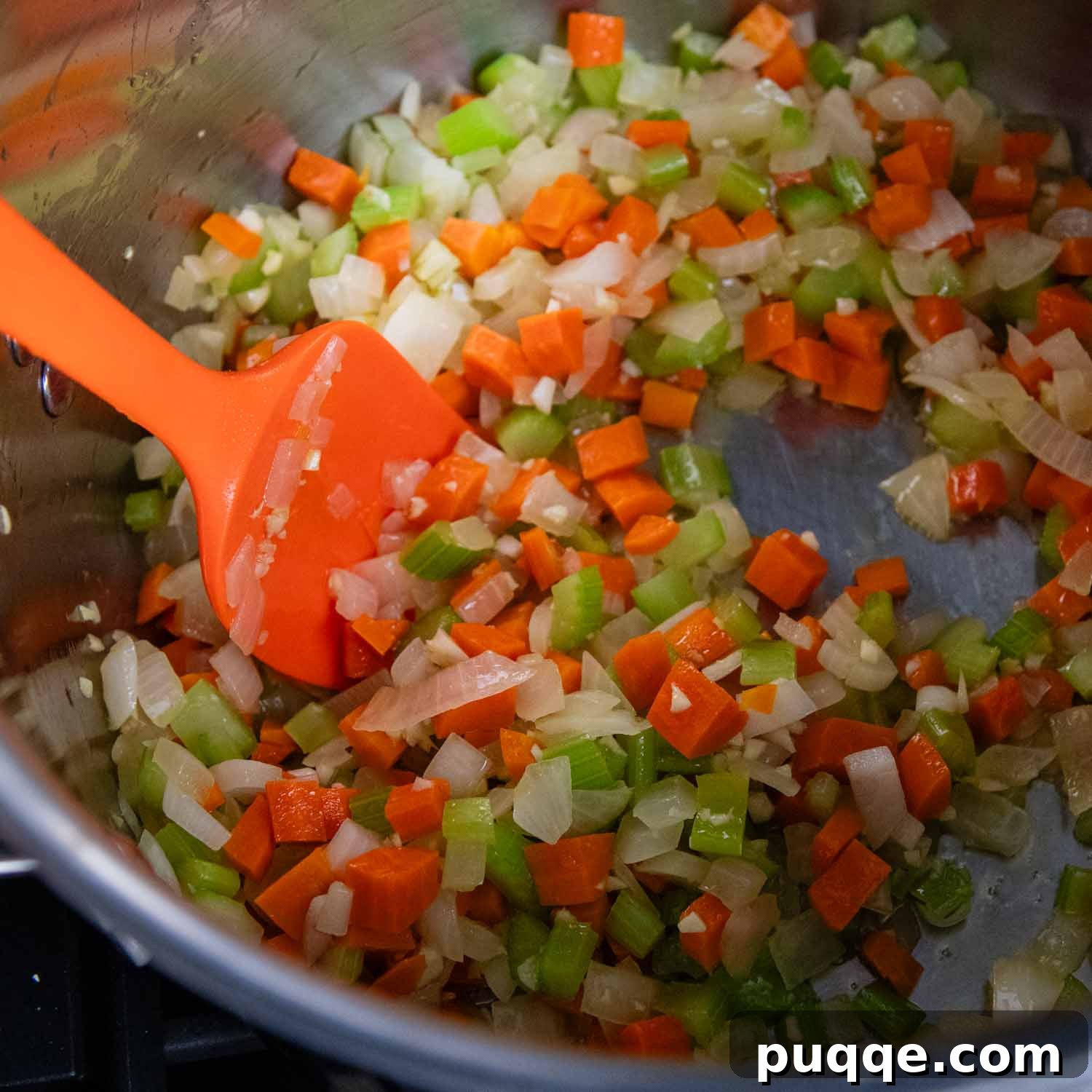
The foundation of any truly delicious soup begins with building layers of flavor. In a large Dutch oven or heavy-bottomed pot, heat a generous splash of olive oil over medium heat. Add your chopped onions, carrots, and celery – the classic trio of aromatics known as mirepoix. Sauté these vegetables, stirring occasionally, until they begin to soften and become crisp-tender, typically around 7 minutes. While they’re working their magic, take this time to mince your garlic and dice your potatoes. This efficient multitasking ensures a smooth cooking process. Remember, we add vegetables in stages, depending on their cooking times, so the magic is just beginning!
Step 2: Unleash the Flavor – Tomato Paste & Spices
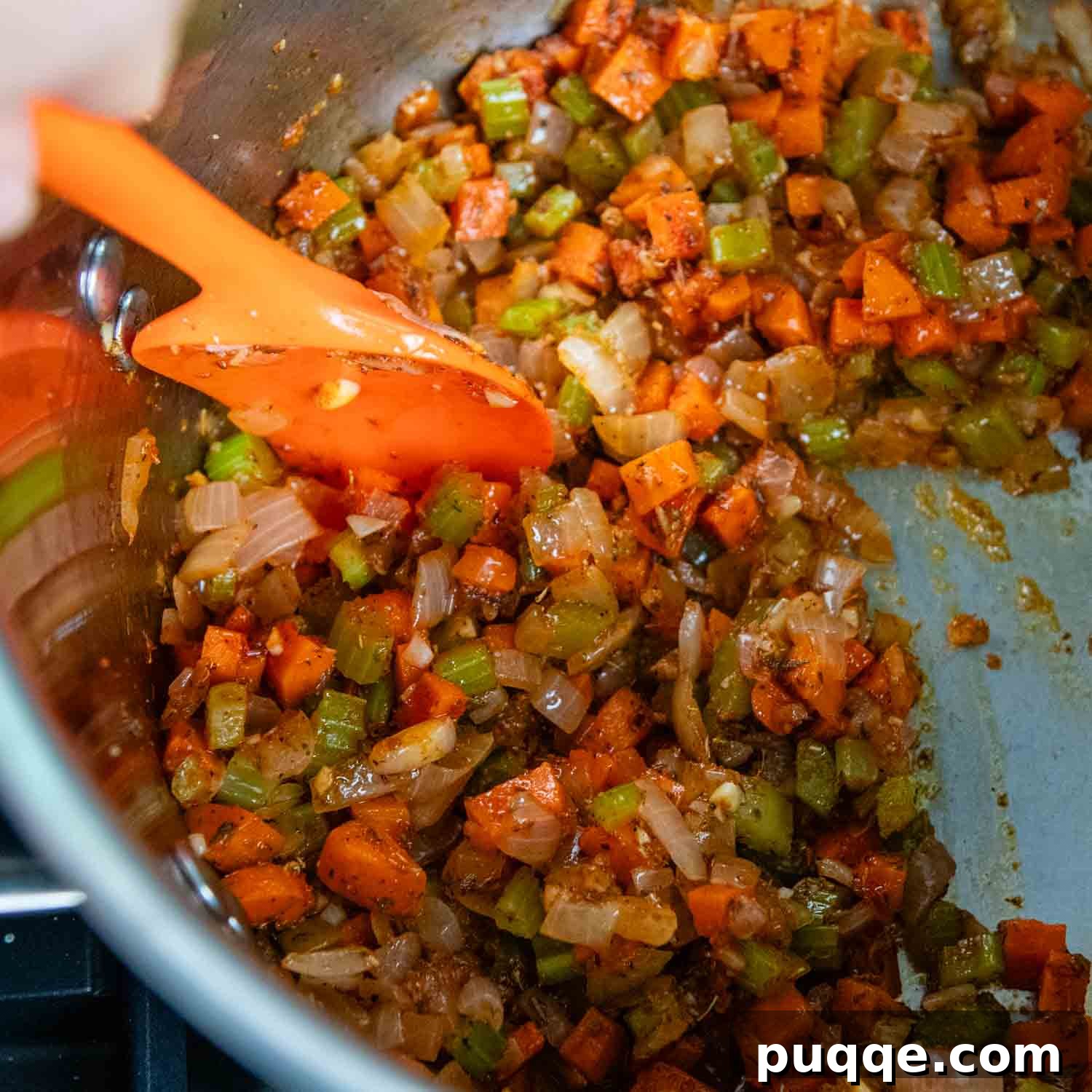
This is where we elevate the flavor profile significantly. Add the tomato paste directly to the sautéed vegetables. Stir it in thoroughly, allowing it to coat the vegetables and cook for about 1-2 minutes. This brief cooking time helps to deepen its color and intensify its flavor, reducing its raw acidity and bringing out a subtle sweetness that will enrich your broth. Immediately after, add the minced garlic, bay leaves, dried thyme, dried oregano, kosher salt, black pepper, and a pinch of crushed red pepper flakes. Cook these spices for another 1-2 minutes, stirring constantly. Briefly cooking the spices in oil (also known as “blooming” them) enhances their aromatic qualities and infuses them more deeply into the soup base, resulting in a much more complex and satisfying flavor than simply adding them to the broth later.
Step 3: The Heart of the Soup – Simmering & Finishing
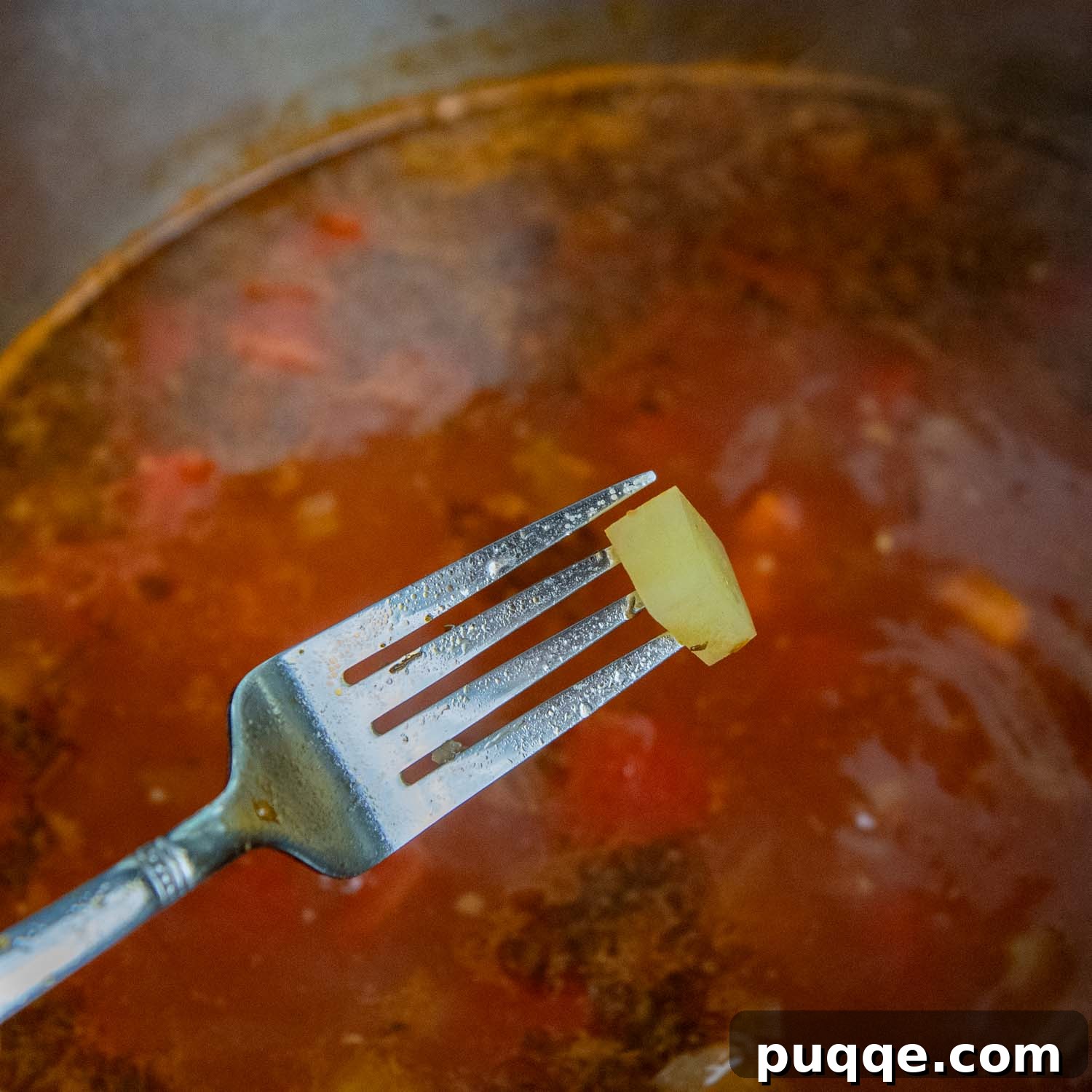
Now it’s time to bring everything together. Add your diced Yukon Gold potatoes to the pot, stirring them gently to ensure they are coated with the fragrant tomato paste and spices. Pour in the gluten-free broth and the undrained diced tomatoes, ensuring the bay leaves are nestled within the liquid. Bring the soup to a boil over medium-high heat, then partially cover the pot, reduce the heat to a gentle simmer, and let it cook. The goal is for the potatoes to become fork-tender, which usually takes about 15-20 minutes. Their creamy texture will also contribute a lovely thickness to the soup.
Once the potatoes are perfectly cooked, it’s time for the final additions. Stir in the remaining quick-cooking vegetables: the drained chickpeas, frozen green beans, frozen corn kernels, and frozen green peas. These vegetables require minimal cooking time, just long enough to heat through and become tender-crisp, typically about 3-5 minutes. Overcooking them would diminish their vibrant color and texture. Finally, remove the bay leaves, add the fresh chopped parsley and, most importantly, the splash of red wine vinegar. Now, perform our recommended flavor experiment: taste the soup before adding the vinegar, then add it, stir, and taste again. The bright, acidic lift it provides is truly remarkable and will balance all the robust flavors. Season with additional salt and pepper to taste, if desired.
Customize Your Creation: More Thoughts on Veggies and Add-Ins
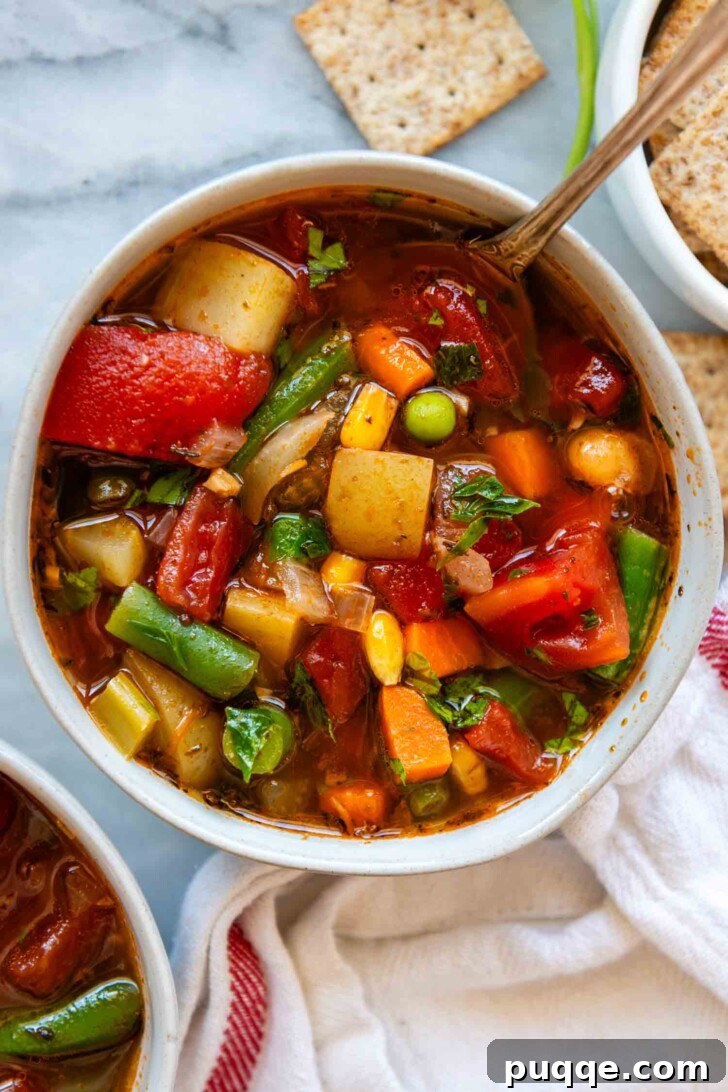
While the recipe card provides a perfect classic blend, one of the greatest joys of making homemade vegetable soup is the endless flexibility it offers for customization. Don’t feel the need to overthink it if you prefer to stick to the recommended ingredients, but if you’re looking to get creative, here are plenty of ideas to inspire you:
- Seasonal & Frozen Vegetables: Adapt your soup to the seasons or simply what’s available. Both fresh and frozen vegetables work wonderfully. If using fresh, heartier vegetables like butternut squash, parsnips, or turnips, add them along with the potatoes to ensure they have enough time to become tender. More delicate fresh vegetables like zucchini or spinach should be added towards the end of the cooking process. Frozen vegetables, such as chopped green beans, corn, and peas, are incredibly convenient and are best added in the last few minutes of simmering, just long enough to heat through.
- Fridge Clean-Out Champion: Homemade vegetable soup is an ingenious way to utilize leftover roasted vegetables or smaller amounts of various produce lingering in your fridge. Broccoli florets, bell peppers, asparagus, or even cooked sweet potatoes can all find a happy home in this soup, adding unique flavors and minimizing food waste.
- Leafy Green Power: Boost the nutritional content and add a pleasant texture with leafy greens. Stir in spinach, kale (remove tough stems and chop finely), shredded cabbage, bok choy, or Swiss chard during the last 5-10 minutes of cooking. They will wilt beautifully into the warm broth.
- For a Heartier Meal: Transform this side dish into a main course by adding more substantial components. Stir in your favorite gluten-free pasta (elbow macaroni or rotini work well) directly into the broth during the last 10-12 minutes of cooking (or according to package directions). Alternatively, incorporate additional beans like white beans, navy beans, great northern, or kidney beans for extra protein and fiber. Lentils or cooked rice can also be stirred in, but be aware that grains will absorb a significant amount of liquid, so you may need to add extra broth to maintain the desired consistency.
- Smoky & Spicy Variations: For a deeper, smoky flavor, swap out regular diced tomatoes for fire-roasted diced tomatoes. You can further enhance this with a teaspoon or two of smoked paprika added with the other spices in Step 2. If you enjoy a bit more heat, increase the crushed red pepper flakes or add a dash of your favorite hot sauce at the end.
- Beyond Chickpeas: While chickpeas are fantastic, feel free to experiment with other bean varieties. White beans (cannellini), navy beans, great northern beans, or kidney beans all offer slightly different textures and flavors that complement the vegetable base beautifully.
FAQ: Can I Make This in a Slow Cooker?
Absolutely! This recipe adapts beautifully to a slow cooker for an incredibly easy, hands-off meal. Simply combine all the ingredients—except for any quick-cooking frozen vegetables like corn, peas, or green beans—into a 6-quart (or larger) slow cooker. Cook on the LOW setting for 6-8 hours, or until the potatoes and other root vegetables are perfectly tender. In the last 30 minutes to an hour of cooking, stir in the frozen corn, peas, and green beans (or any other delicate, quick-cooking veggies) and allow them to heat through until tender-crisp. This method allows the flavors to meld beautifully over time, resulting in an even richer, deeply satisfying soup with minimal effort.
Serving Suggestions for Your Gluten-Free Vegetable Soup
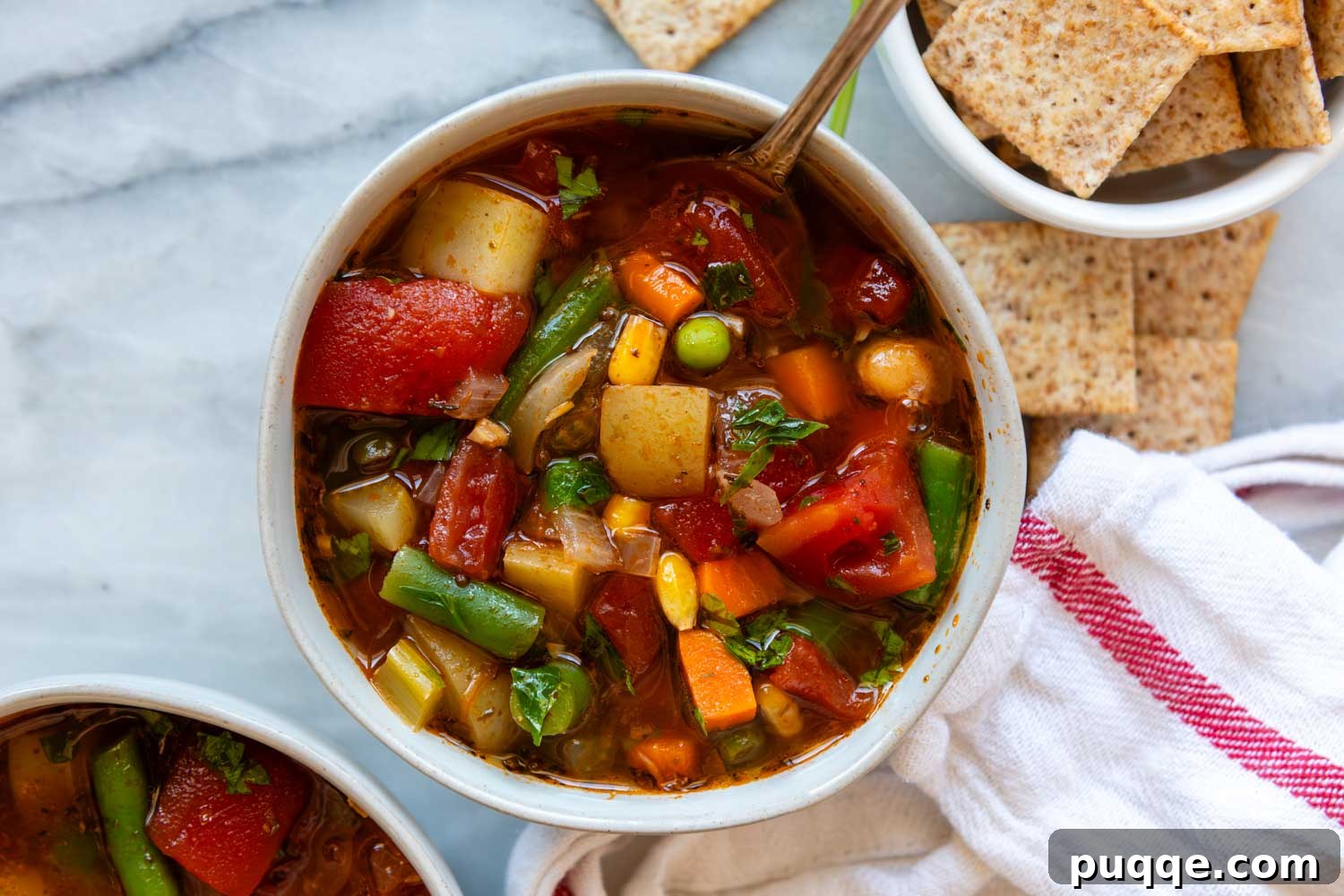
This hearty gluten-free vegetable soup is incredibly versatile and pairs well with a variety of accompaniments. For a classic, comforting meal, serve it alongside crusty gluten-free bread or cornbread for dipping. A simple green salad with a light vinaigrette makes for a refreshing contrast. For added protein, you can stir in cooked shredded chicken or beef, or top individual bowls with a dollop of Greek yogurt or a sprinkle of grated Parmesan cheese (if not vegan). Fresh herbs like parsley or chives are always a welcome garnish, adding a touch of color and freshness.
Health Benefits of Homemade Vegetable Soup
Beyond its incredible flavor and comforting warmth, this homemade vegetable soup is a powerhouse of nutrition. Packed with a wide array of vegetables, it’s naturally rich in vitamins, minerals, and dietary fiber. Carrots provide Vitamin A for vision, potatoes offer potassium and Vitamin C, while beans and chickpeas contribute plant-based protein and fiber, promoting satiety and digestive health. The rich broth, especially if homemade or a good quality store-bought option, provides hydration and essential electrolytes. Opting for a gluten-free version ensures it’s suitable for those with celiac disease or gluten sensitivity, making it an inclusive and healthy choice for almost everyone. It’s a wonderful way to boost your daily vegetable intake in a delicious and enjoyable format.
Storage and Freezing Tips
Homemade vegetable soup is fantastic for meal prepping! It tends to taste even better the next day as the flavors have more time to meld. For leftovers, allow the soup to cool completely before transferring it to an airtight container. It will keep beautifully in the refrigerator for up to 5 days, making it perfect for quick lunches or easy dinners throughout the week.
This soup is also incredibly freezer-friendly, allowing you to enjoy a comforting bowl whenever a craving strikes. Once the soup has cooled completely, portion it into freezer-safe containers or heavy-duty freezer bags, leaving a little headspace for expansion. It can be stored in the freezer for up to 4 months. When you’re ready to enjoy, simply thaw overnight in the refrigerator or gently reheat on the stovetop from frozen over low heat, stirring occasionally. You might notice that the potatoes become slightly softer upon thawing, but this minor change in texture will not diminish the delicious flavor of your soup.
Save This Delicious Recipe to Your Pinterest Board!
Let’s be friends on Pinterest! I’m always sharing great recipes and culinary inspiration!
Did you make this delightful recipe? I absolutely love hearing from you! Please leave a star rating and comment below the recipe card. Your feedback is invaluable, as it helps others discover and enjoy these recipes, and I truly appreciate hearing from our wonderful community. You can always expect a response from me! -Melissa
5 stars (1 rating)
Hearty Old-Fashioned Vegetable Soup (Gluten-Free)

Melissa Erdelac
10
1 1/2 cups
10
mins
35
mins
45
mins
If you are tired of average and underwhelming veggie soups, this easy gluten-free recipe for homemade vegetable soup will make your tastebuds sing again. It channels the hearty, classic flavor of Gramma’s recipe, but adds a little splash of something special to punch up the flavor. It’s chock-full of a perfectly medley of chunky vegetables, like potatoes, beans, carrots, corn, peas, and tomatoes.
Pin Recipe
Rate Recipe
Remove Ads
Ingredients
- 3 tablespoons olive oil
- 1 large onion, chopped
- 3 medium carrots, peeled and diced
- 3 large celery stalks, diced
- 2 tablespoons tomato paste
- 6 garlic cloves, minced
- 2 bay leaves
- 1 teaspoon dried thyme
- 1½ teaspoon dried oregano
- 1 teaspoon kosher salt
- ¼ teaspoon black pepper
- ⅛ teaspoon crushed red pepper
- 3-4 Yukon Gold potatoes, diced, about 2 cups
- 8 cups (2 quarts) gluten-free vegetable broth
- 2 (15 ounce) can diced tomatoes, undrained
- 15 ounce canned chickpeas, drained and rinsed
- 1 cup frozen chopped green beans
- 1 cup frozen corn kernels
- 1 cup frozen green peas
- ⅓ cup chopped fresh parsley
- 1 tablespoon red wine vinegar
Equipment
- Dutch Oven
- Santoku Knife
Instructions
-
In a large pot or Dutch oven, heat the olive oil over medium heat. Add the chopped onions, carrots, and celery. Cook, stirring occasionally, until the vegetables are crisp-tender, about 7 minutes. While they cook, mince the garlic and dice the potatoes.
-
Add the tomato paste, minced garlic, dried thyme, dried oregano, kosher salt, black pepper, and crushed red pepper flakes to the pot. Cook for about 2 minutes longer, stirring frequently to bloom the spices and deepen the tomato paste flavor.
-
Stir in the diced potatoes. Add the gluten-free broth, undrained diced tomatoes, and bay leaves. Bring to a boil over medium-high heat. Partially cover the pot, lower the heat to a simmer, and cook until the potatoes are fork-tender, about 20 minutes.
-
Stir in the drained and rinsed chickpeas, frozen chopped green beans, frozen corn kernels, and frozen green peas. Return to a simmer and cook until the green beans are tender-crisp and all vegetables are heated through, about 3 minutes more.
-
Remove the pot from the heat and carefully remove the bay leaves. Stir in the chopped fresh parsley and red wine vinegar. Taste the soup and season with additional salt and pepper if desired. This recipe yields approximately 15 cups of soup.
Notes
Storing and Freezing Leftovers
Store any leftover soup in an airtight container in the refrigerator for up to 5 days. This soup is also freezer-friendly; cool it completely before transferring to freezer-safe containers or bags. It can be frozen for up to 4 months. Upon thawing, the potatoes may soften slightly, but the soup will retain its delicious flavor!
Adapted from New York Times
Nutrition Information
- Calories:
- 183kcal
- Carbohydrates:
- 30g
- Protein:
- 6g
- Fat:
- 6g
- Saturated Fat:
- 1g
- Polyunsaturated Fat:
- 1g
- Monounsaturated Fat:
- 3g
- Sodium:
- 1300mg
- Potassium:
- 646mg
- Fiber:
- 6g
- Sugar:
- 8g
- Vitamin A:
- 3996IU
- Vitamin C:
- 31mg
- Calcium:
- 78mg
- Iron:
- 3mg
Did you make this recipe? Please leave a star rating and review below. It helps others when searching for recipes and I LOVE feedback!