
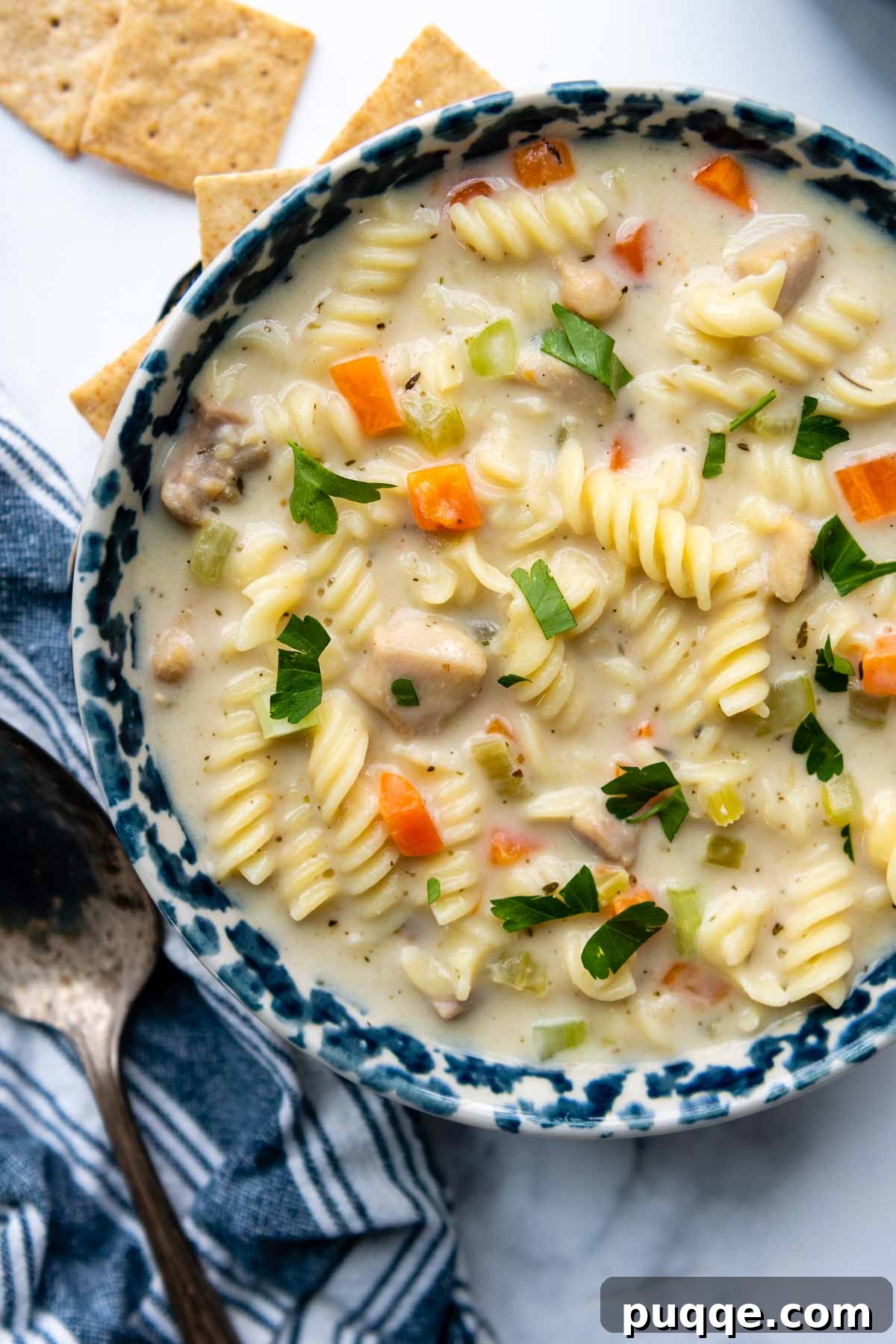
Welcome to the ultimate guide for crafting the most comforting and flavorful homemade gluten-free chicken noodle soup! This isn’t just any recipe; it’s a quick, creamy twist on a beloved classic, meticulously designed to be safe and satisfying for a gluten-free diet. We’ll dive deep into essential tips for achieving rich, savory flavors, optimal storage solutions to prevent mushy noodles, and the best reheating techniques. Prepare to transform simple ingredients into a soul-warming meal that your entire family will adore, free from gluten but full of taste.
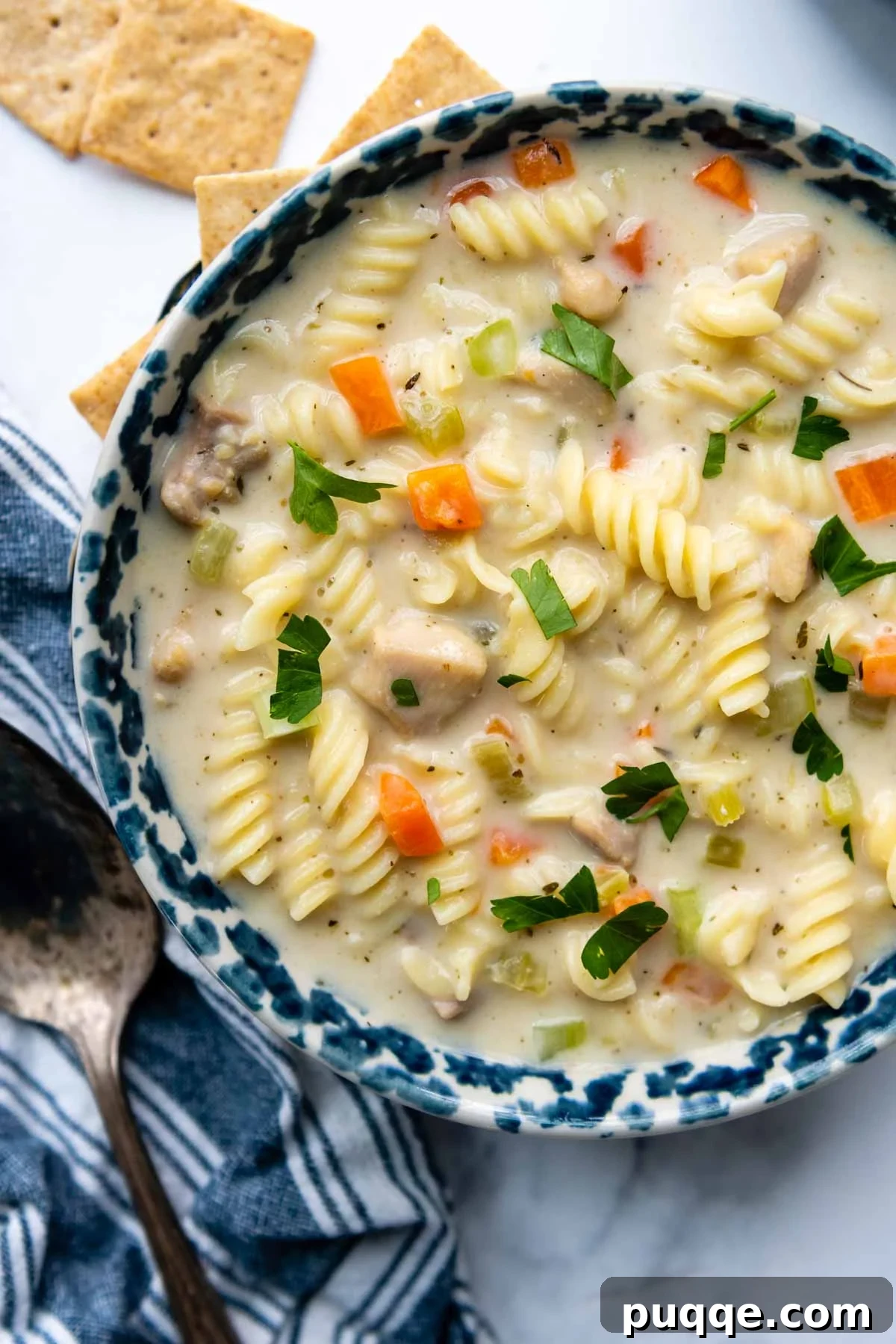
Crafting the Perfect Gluten-Free Chicken Noodle Soup
There’s nothing quite like a steaming bowl of chicken noodle soup to bring comfort and warmth, especially when you’re seeking a safe and delicious option for those with gluten sensitivities. Many store-bought soups can be problematic due to hidden gluten, making a homemade approach not just preferable, but often essential. Our recipe for gluten-free chicken noodle soup stands out for its incredible ease, requiring less than 40 minutes from start to finish, and its reliance on readily available, affordable ingredients found at any local grocery store.
Beyond its speed and accessibility, this recipe introduces a delightful creamy element that elevates it above traditional versions. The secret? A touch of evaporated milk, which imparts a luxurious, velvety texture and richness that will have everyone asking for seconds. This innovative addition is a game-changer for enhancing the depth of flavor in your soup, making it an indispensable recipe, much like our favorite gluten-free cream of chicken soup, for those moments when you need a quick, nourishing, and deeply satisfying meal.
We understand the common challenges that come with gluten-free cooking, particularly when it comes to pasta. This comprehensive guide eliminates the guesswork, providing clear recommendations for the best gluten-free noodles to use, trusted gluten-free chicken broth brands, and crucial techniques to prevent your noodles from becoming mushy, whether you’re serving immediately or reheating leftovers. Every detail is covered to ensure your homemade gluten-free chicken noodle soup is a resounding success, packed with flavor and perfect texture.
Essential Ingredients for Your Gluten-Free Chicken Noodle Soup
The beauty of this homemade gluten-free chicken noodle soup recipe lies in its adaptability. Feel free to customize it to your family’s preferences by adding or omitting certain vegetables. For instance, finely chopped onion can be sautéed with the carrots and celery for an extra layer of flavor, or a handful of frozen peas can be stirred in at the end for a pop of color and sweetness. Here’s a closer look at the key components:
- Chicken: For the most tender, flavorful bites, boneless chicken thighs are highly recommended. Their higher fat content makes them incredibly forgiving to cook, ensuring juicy, succulent chicken every time. For alternative protein choices and preparation methods, refer to the detailed section on Best Chicken To Use For Soup below.
- Vegetables: We stick to the classic trio of carrots, celery, and garlic, which form the aromatic foundation of any great chicken soup. These vegetables not only add essential nutrients but also contribute significantly to the soup’s depth of flavor.
- Seasonings: Our recipe utilizes a blend of common pantry spices for ease and consistent flavor. Salt, pepper, onion powder, dried oregano, and thyme create a well-rounded savory profile. While fresh herbs can certainly be used, dried varieties offer convenience without sacrificing taste. A bay leaf can be simmered with the broth for added complexity, or a squeeze of fresh lemon juice at the end can brighten the overall flavor.
- Gluten-Free All-Purpose Flour: A small amount of gluten-free all-purpose flour helps to slightly thicken the soup, creating a more substantial and luxurious broth. If you prefer a thinner, more traditional consistency, this ingredient can be omitted without issue. Ensure your chosen flour blend is specifically labeled gluten-free.
- Broth: The quality of your broth is paramount to the overall flavor of your soup. Always double-check labels to ensure you’re using a certified gluten-free chicken broth. We’ve listed some widely available and trusted brands further down in the Gluten-Free Broth Brands section. If you opt for chicken stock or bone broth, which are often richer, you may need to slightly reduce the amount of added salt, as these can be more concentrated in sodium.
- Gluten-Free Pasta: The right noodles make all the difference. There’s a wide array of excellent gluten-free pasta options available today. Our recipe features a favorite, but you can explore various shapes and types. We’ve dedicated a section to alternative GF noodle options and crucial cooking tips to ensure your pasta remains perfectly al dente and never mushy.
- Evaporated Milk: This is our “secret weapon” for achieving that incredibly rich and velvety texture. Evaporated milk, with its reduced water content, adds a creamy depth unparalleled by regular milk. This same trick is employed in our creamy Chicken Dumpling Soup and Gluten-Free Potato Soup. For those needing alternatives, whole milk, half and half, heavy cream, or a preferred dairy-free milk can be substituted. For a more old-fashioned, clear-broth soup, you can omit the evaporated milk entirely.
Step-by-Step: Crafting Your Creamy Gluten-Free Chicken Noodle Soup
Making this delightful creamy gluten-free chicken noodle soup is surprisingly simple, even for novice cooks. Follow these detailed steps to create a nourishing and incredibly satisfying meal. (For exact ingredient quantities, please scroll down to the complete recipe card.)
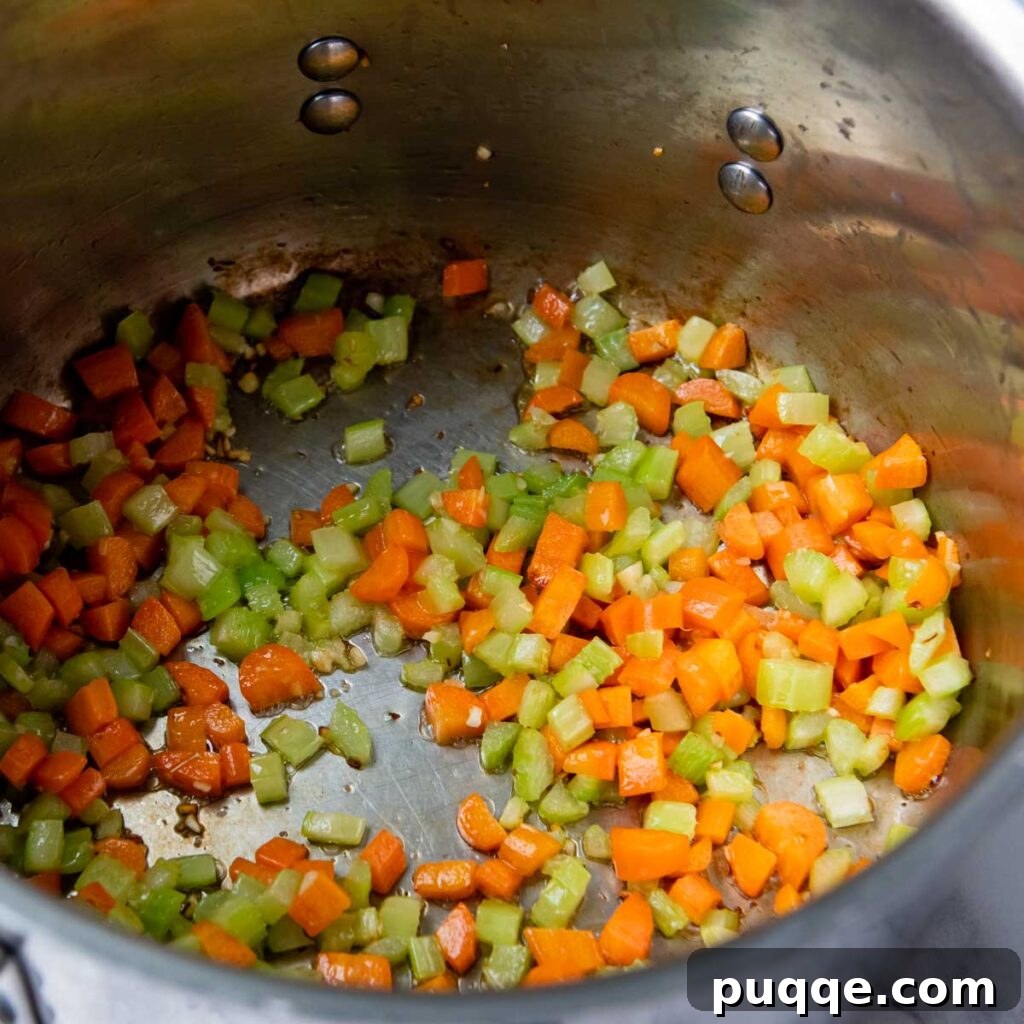
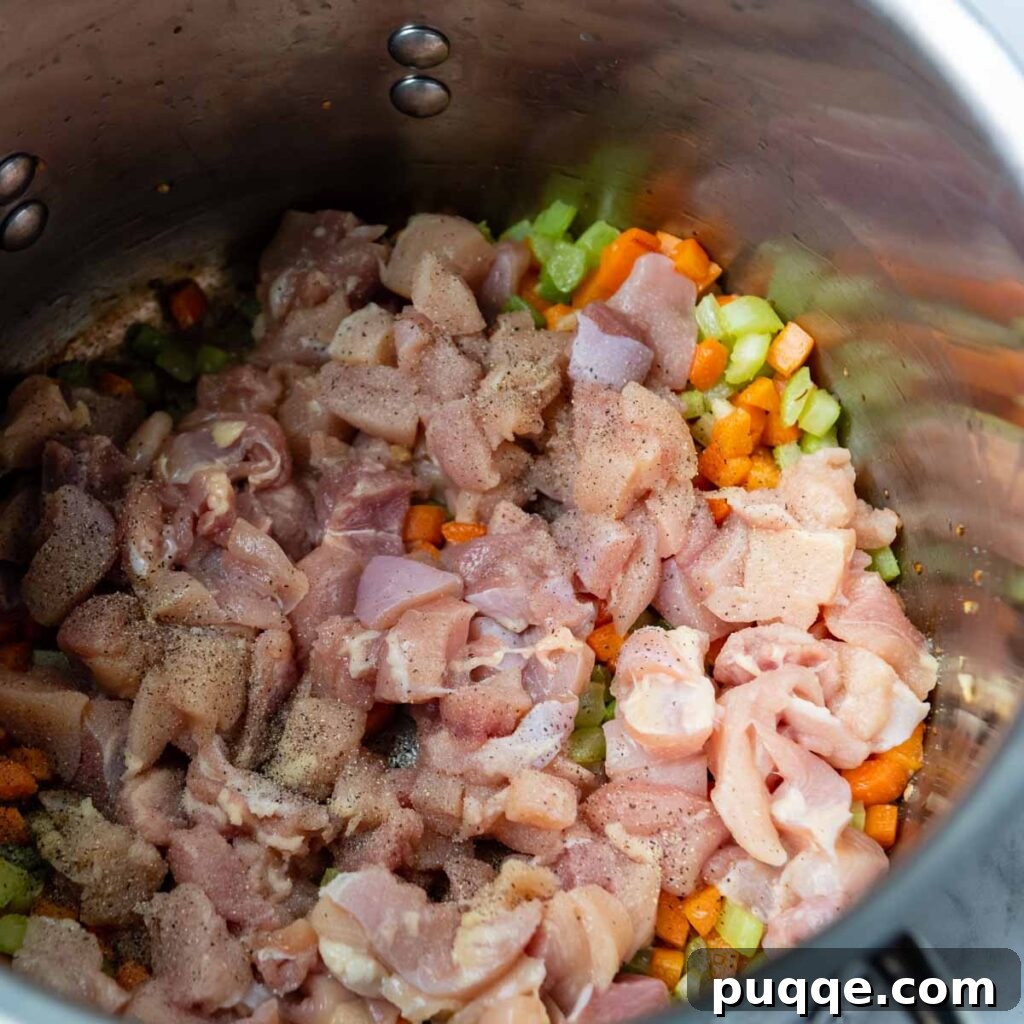
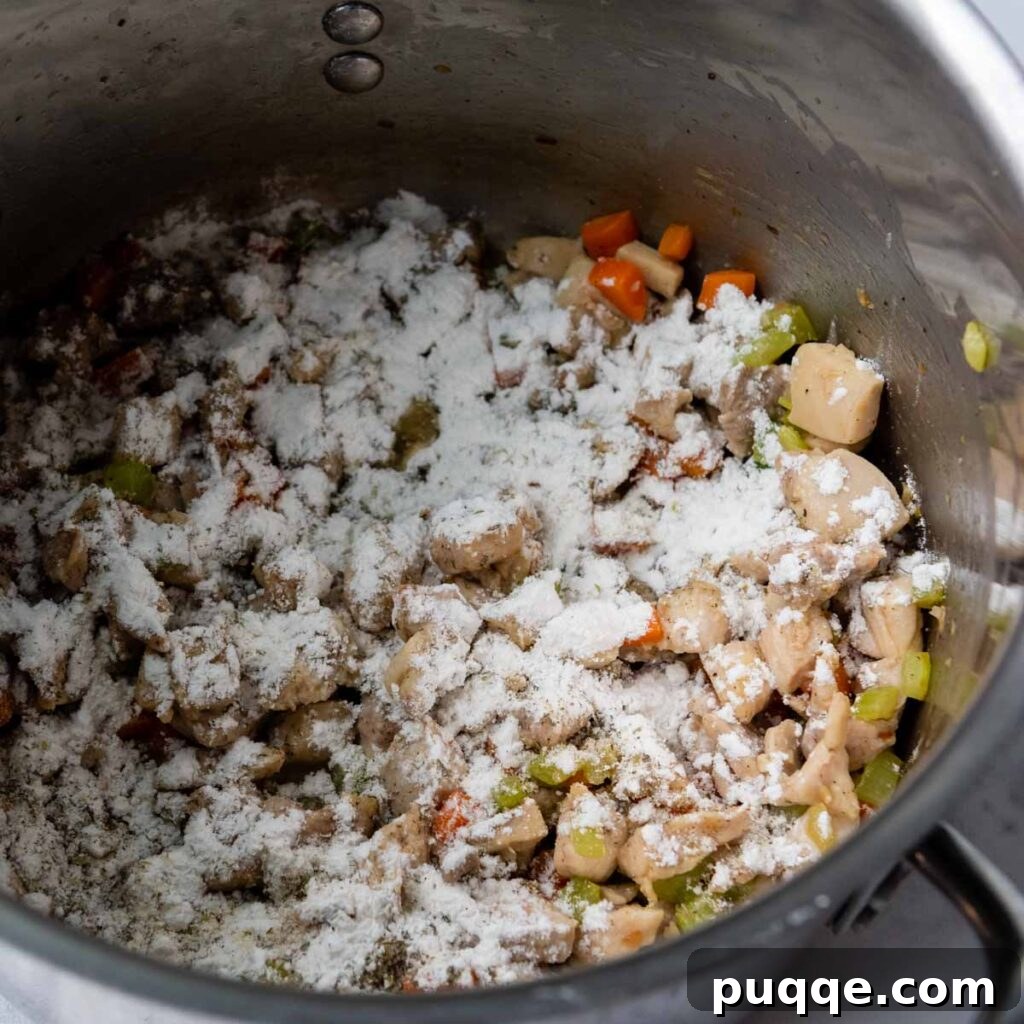
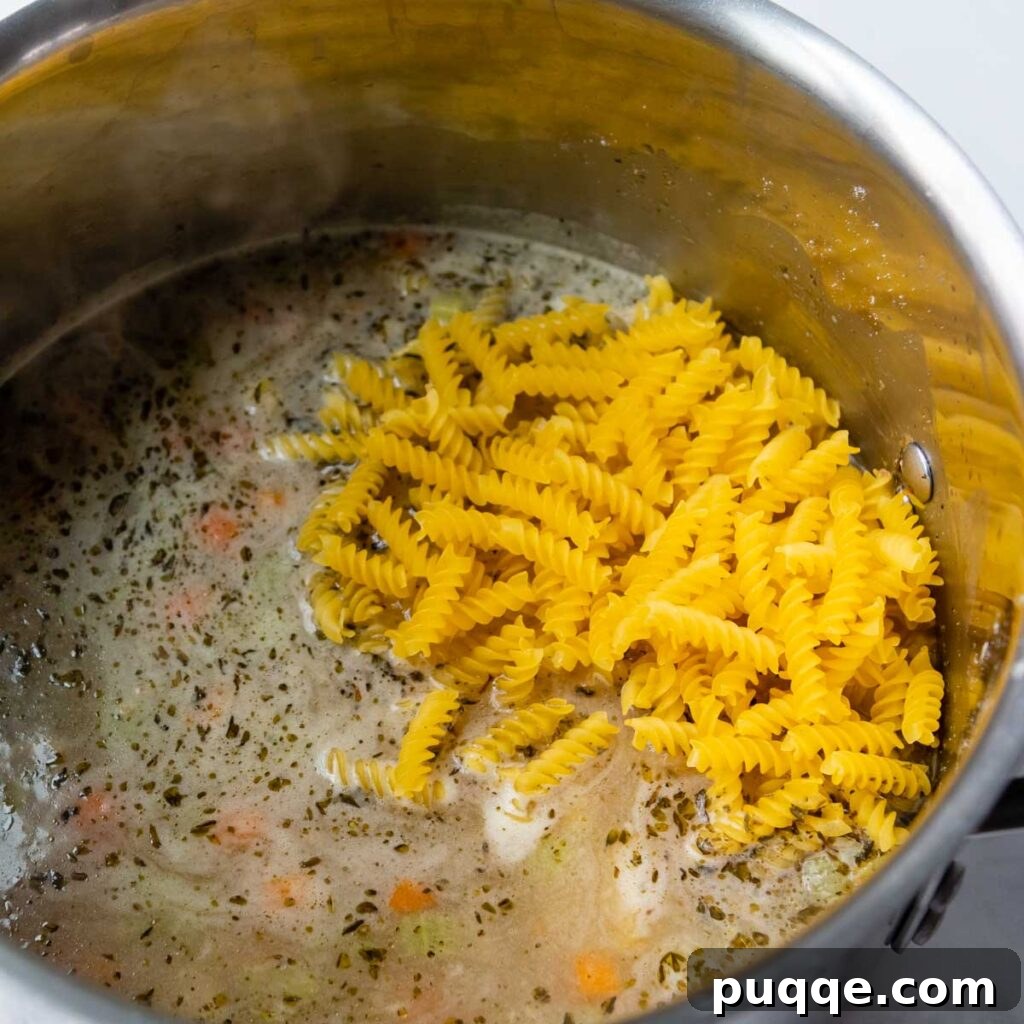
- Sauté the Aromatics: Begin by heating a large, heavy-bottomed stock pot or Dutch oven over medium heat. Add the butter and allow it to melt completely. Stir in the diced carrots, celery, and minced garlic cloves. Sauté gently for about 5 minutes, or until the vegetables begin to soften and become fragrant. This step builds the foundational flavor of your soup.
- Brown the Chicken: Add the bite-sized chicken pieces to the pot. Season generously with salt and pepper. Cook for approximately 4 minutes, stirring occasionally, until the chicken is no longer pink on the outside. It doesn’t need to be fully cooked through at this stage. Stir in the gluten-free all-purpose flour along with your chosen dried seasonings (thyme, onion powder, oregano). Cook for another minute, stirring constantly, to lightly toast the flour and herbs.
- Build the Broth: Gradually pour in the gluten-free chicken broth, whisking continuously to prevent lumps from the flour and to scrape up any delicious browned bits from the bottom of the pan. These “fond” bits are packed with flavor and will enrich your soup significantly. Bring the liquid to a rolling boil.
- Noodle Integration (Key Tip!): This is a crucial step for perfect gluten-free noodles. If you anticipate having leftovers or won’t consume the entire batch of soup in one sitting, it is highly recommended to boil your gluten-free noodles separately. Cook them just under al dente, drain, and then add them to individual serving bowls just before ladling in the hot soup. This prevents the noodles from soaking up too much broth, becoming mushy, and breaking down during storage and reheating.
- Cook the Noodles (If cooking in soup): If you plan to eat the entire soup immediately, add the gluten-free pasta directly to the simmering broth. Reduce the heat to a gentle simmer and cook the noodles for about 6-7 minutes, stirring occasionally. Aim to cook them to just under al dente, as they will continue to soften and absorb liquid from the hot broth even after the heat is removed.
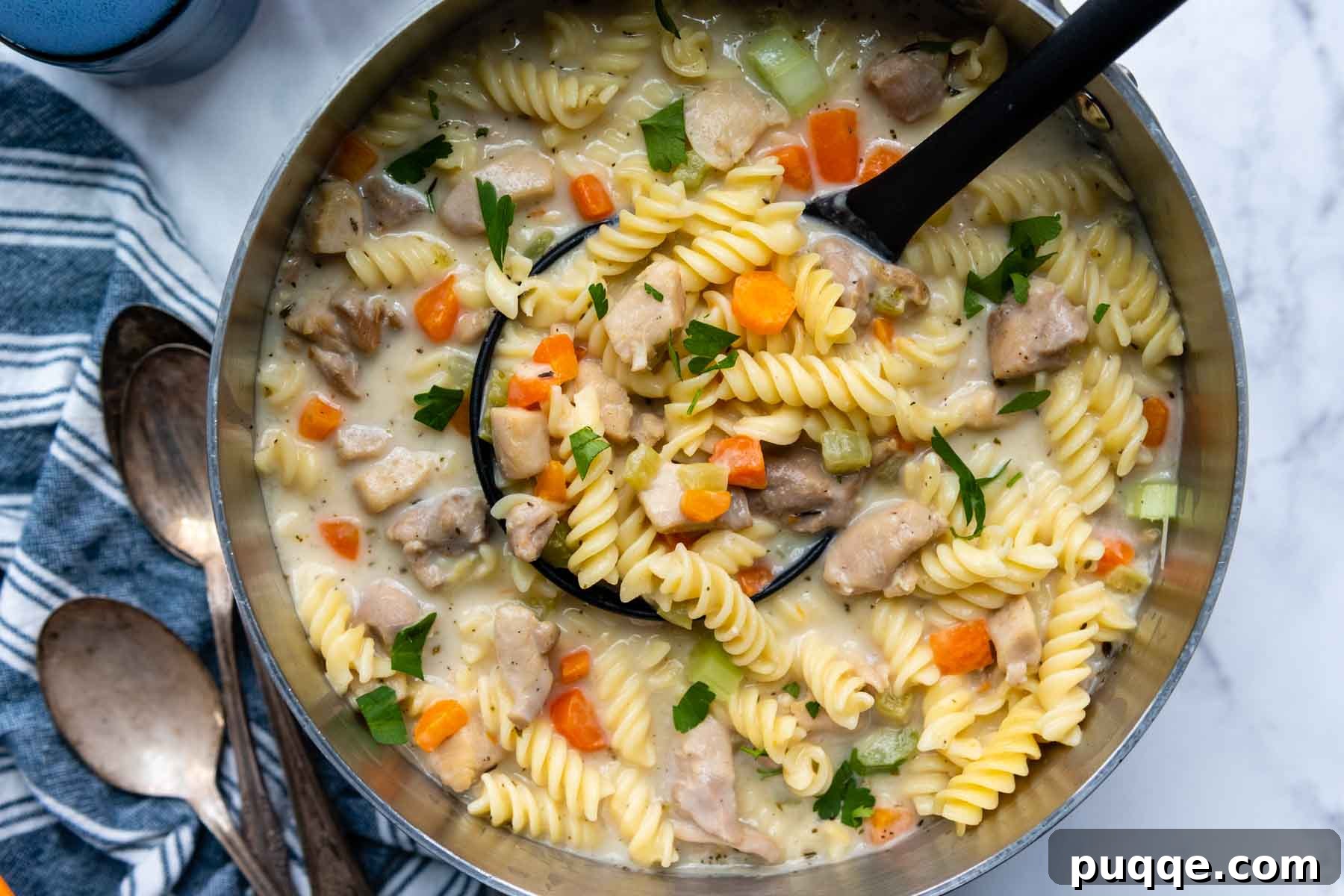
- Finishing Touch: Finally, stir in the evaporated milk. Allow the soup to heat through for another minute or two, but do not bring it back to a vigorous boil after adding the milk, as it can sometimes curdle. Taste and adjust seasonings as needed. Ladle into serving bowls and, if desired, garnish with fresh chopped parsley for a burst of color and freshness. Serve immediately and enjoy the creamy, comforting goodness!
Mastering Gluten-Free Noodles for Soup: Tips and Alternatives
Achieving perfectly cooked gluten-free noodles in soup can be a challenge, but with the right choices and techniques, it’s entirely possible to avoid the dreaded mushy texture. When developing recipes for a gluten-free lifestyle, I prioritize using affordable and widely available ingredients without compromising on taste or texture. For this gluten-free chicken noodle soup, my go-to choice is Barilla gluten-free rotini, which consistently delivers excellent results and is easily found in most grocery stores.
PRO TIP FOR PERFECT GF NOODLES: When boiling gluten-free noodles, whether separately or directly in the soup, always undercook them slightly – about 2 minutes less than the “al dente” time specified on the package. The residual heat from the broth will continue to cook them to perfection, preventing them from becoming mushy. This is especially vital if you plan on storing or reheating the soup.
While rotini works beautifully, you might be seeking something closer to traditional egg noodles or simply more variety. Here are several fantastic alternatives for your gluten-free chicken noodle soup, with a reminder to always adjust cooking times according to package directions and the pro tip above:
- Gluten-Free Egg Noodles (Amish-style): These offer a classic, homestyle texture, perfect for a comforting soup.
- Manischewitz GF Egg Noodles (Kosher): Another excellent option for traditional egg noodle flavor and feel, with a kosher certification.
- Cooked Rice: For a noodle-free alternative that still adds a hearty starch, cooked white or brown rice can be stirred in at the end.
- Gluten-Free Elbow or Penne Pasta: Smaller, sturdy shapes like elbows or penne hold up well in soup and are widely available.
- Gluten-Free Fettuccine, Broken in Thirds: If you prefer longer strands, break gluten-free fettuccine into smaller, manageable pieces before cooking.
- Buckwheat or Rice Noodles: These offer a slightly different flavor and texture profile, often found in Asian cuisine sections, and can be a delicious twist.
- GF Wide Egg-Free Noodles: Ideal for those with egg allergies or seeking a specific texture.
- Vegetable Zoodles (Zucchini Noodles): For a low-carb, vegetable-rich option, add spiralized zucchini noodles at the very end of cooking, allowing them to soften for only a minute or two to retain their crispness.
For more inspiration on starch alternatives beyond pasta, you can refer to the “starch alternatives” section in this easy recipe for kale soup.
Making Your Chicken Noodle Soup Dairy-Free
Adapting this delicious gluten-free chicken noodle soup to be completely dairy-free is remarkably simple, requiring just a couple of minor ingredient swaps. You can easily ensure everyone can enjoy this comforting meal, regardless of dairy restrictions.
- Butter Alternative: Instead of traditional butter, opt for dairy-free butter sticks or substitute with 2 tablespoons of olive oil or avocado oil for sautéing your vegetables. Both options will provide a rich base for your aromatics without any dairy.
- Evaporated Milk Alternative: The evaporated milk, which provides the creamy element, can be either eliminated entirely for a more traditional, clear-broth soup, or replaced with a dairy-free alternative. While I personally adore the creamy texture evaporated milk provides, I understand it’s not suitable for all diets. If you still desire creaminess, consider using a non-dairy heavy cream substitute (such as full-fat canned coconut milk for a subtle tropical note, or a specialized dairy-free cooking cream), dairy-free sour cream, or a couple of ounces of room-temperature dairy-free cream cheese whisked in at the end. Experiment to find your favorite dairy-free creamy addition!
Choosing the Best Chicken for Your Soup
The type of chicken you choose significantly impacts the flavor and texture of your homemade gluten-free chicken noodle soup. While there are several viable options, boneless chicken thighs consistently emerge as the top choice for their superior flavor and foolproof tenderness. Here’s why:
- Boneless Chicken Thighs: These are the ultimate no-fail option for succulent, juicy chicken. Thighs boast a higher fat content compared to breasts, which translates to richer flavor and incredible tenderness. This fat breaks down during cooking, keeping the chicken moist and preventing it from becoming tough or rubbery, even if simmered for slightly longer. This quality makes them perfect for soups and casseroles, like our family-favorite gluten-free chicken and rice casserole.
- Boneless Chicken Breasts: If you prefer white meat, boneless chicken breasts can certainly be used. However, they are leaner and can become dry and tough if overcooked. To prevent this, you have two options:
- Precook Separately: Poach or bake the chicken breasts, then shred or dice them before adding them to the soup during the last few minutes of cooking to simply warm through.
- Cook in Soup (Carefully): If cooking directly in the soup as directed in the recipe, be mindful not to overcook. Once they are no longer pink and cooked through, they are done.
- Rotisserie Chicken: For the ultimate shortcut, a store-bought rotisserie chicken is an excellent choice. It offers a wonderful blend of both white and dark meat, infused with savory, pre-cooked flavors. Using rotisserie chicken allows you to skip the initial sautéing step, making your soup even quicker to prepare. Simply shred the meat and add it to the soup towards the end of the cooking process, allowing it to heat through.
Navigating Gluten-Free Broth Brands
Chicken broth or stock forms the very heart of your gluten-free chicken noodle soup, infusing it with flavor and richness. While store-bought broths are fantastic time-savers for soups and recipes like gluten-free gravy, it’s crucial to be vigilant when selecting brands for a gluten-free diet. Not all broths are created equal, and some may contain hidden wheat ingredients or cross-contamination that can be problematic for individuals with celiac disease or gluten sensitivities.
The golden rule is always to read labels carefully. Be on the lookout for suspicious ingredients such as yeast extract, natural flavors (which can sometimes derive from gluten-containing sources), wheat, or barley malt. When a product is explicitly labeled “gluten-free,” you can generally trust it, but without that certification, a thorough ingredient check is essential.
To make your shopping easier, here are some widely trusted and clearly labeled gluten-free chicken broth brands:
- Swanson: Both Swanson brand broth and stock products are well-known for being clearly labeled and verified as safe for gluten-free consumption.
- College Inn: College Inn offers a variety of broths that are certified gluten-free, providing several choices for your culinary needs.
- Imagine: This brand is recognized for its organic and natural products, including a range of certified gluten-free broths.
- Kitchen Basics: Another reliable option, Kitchen Basics offers a selection of gluten-free broths and stocks.
- Pacific Foods: Known for its organic and wholesome products, Pacific Foods consistently provides clearly labeled gluten-free broth options.
When it comes to private label brands, the clarity can vary. While some, like Walmart’s Great Value, Kroger, and Target, might not list gluten ingredients, they may also carry “may contain gluten” disclaimers, indicating potential cross-contamination. Always err on the side of caution with these. However, Aldi’s Simply Nature organic brand and Chef’s Cupboard are often praised for clearly labeling their broths as gluten-free, making them safe and affordable choices.
Freezing and Storing Gluten-Free Chicken Noodle Soup
The question of whether you can freeze gluten-free chicken noodle soup often comes with a caveat: yes and no. While the delicious broth and tender chicken freeze beautifully, gluten-free noodles themselves do not hold up well to the freezing and reheating process. They tend to absorb too much liquid, become mushy, and break down, resulting in an unappetizing texture, even if the flavor remains good.
However, there’s an ingenious way to enjoy frozen gluten-free chicken noodle soup! The secret lies in a smart meal prep strategy:
- Freeze the Base Separately: Prepare the chicken noodle soup recipe exactly as instructed, but do not add the gluten-free noodles. Cook the vegetables and chicken until tender, then allow the entire soup base (broth, chicken, and veggies) to cool completely.
- Airtight Storage: Transfer the cooled soup base to airtight, freezer-safe containers or heavy-duty freezer bags. Ensure you leave a little headspace for expansion if using rigid containers.
- Freezing: Freeze the soup base for up to 3-4 months.
When you’re ready to enjoy a warm bowl of soup:
- Thaw and Reheat: Thaw the frozen soup base in the refrigerator overnight, or gently rewarm it on the stovetop over low heat until it comes to a gentle simmer.
- Add Freshly Cooked Noodles: Once the soup base is hot, bring it to a gentle boil. Add your desired gluten-free noodles and cook for about 5-6 minutes, or until they are just tender (remember our pro tip to undercook slightly!).
Alternatively, you can rewarm the noodle-free soup base and add freshly cooked rice for a hearty chicken and rice soup variation. This method ensures that every bowl of soup you enjoy has perfectly textured noodles, making your meal prep efforts truly worthwhile.
For convenient, individual-sized portions that are perfect for weekday lunches or quick emergency meals, I highly recommend investing in “souper” handy souper cubes. They allow you to freeze precise portions, making it incredibly easy to pull out just what you need and transform leftovers into ready-made freezer meals!
Optimal Storage and Reheating for Best Results
Proper storage and reheating are key to maintaining the delicious quality of your gluten-free chicken noodle soup, especially when dealing with the unique properties of gluten-free pasta. The most important consideration to remember about this recipe, and gluten-free noodle soups in general, is that the pasta will continue to absorb liquid from the broth as it sits. This can lead to a significantly thicker soup with reduced liquid over time.
Therefore, if you don’t anticipate consuming the entire batch of soup in one sitting, it is strongly advised to cook the gluten-free noodles separately and add them to individual bowls just before serving. This proactive step prevents the noodles from becoming overly soft and mushy, ensuring a fresh texture with every serving.
If you’ve already added the noodles to the soup and have leftovers to rewarm, don’t despair! Here’s how to best handle it:
- Add More Liquid: When reheating the soup, you’ll likely notice it has thickened considerably. To thin it back to your desired consistency, add additional gluten-free chicken broth, water, or even a splash of milk (dairy or dairy-free) to the pan.
- Gentle Reheating: Reheat the soup gently over medium-low heat on the stovetop, stirring occasionally, until it is warmed through. Avoid boiling vigorously, especially if you’ve added milk, to prevent curdling.
- Adjust Seasonings: After adding more liquid, always taste the soup and adjust the seasonings as needed. The added liquid may dilute the flavors, so a pinch more salt, pepper, or your favorite herbs might be necessary to restore its vibrant taste.
Following these tips will ensure your leftover gluten-free chicken noodle soup remains as comforting and delicious as the freshly made batch.
Perfect Pairings: What to Serve with Your Chicken Noodle Soup
Homemade gluten-free chicken noodle soup is a meal unto itself, ideal for a light, nourishing dinner or a comforting weekday lunch. To round out the meal and add an extra layer of satisfaction, consider pairing it with one of these delicious accompaniments. Nothing beats having something warm and crusty to dunk into that rich, creamy broth!
- Soft Gluten-Free Rolls: Perfectly soft and chewy rolls are excellent for soaking up every last drop of flavorful broth.
- Quick Gluten-Free Beer Bread: A rustic, easy-to-make bread that offers a unique flavor profile and a satisfying crust.
- Easy Gluten-Free Breadsticks: Light, airy, and perfect for a lighter dipping option, often a hit with kids too!
- Fluffy Gluten-Free Biscuits: Buttery and tender, these biscuits are a classic pairing for any comforting soup.
- Fresh Green Salad: A simple, crisp green salad with a light vinaigrette provides a refreshing contrast and adds vital nutrients to your meal.
- Sides for Chili: Don’t limit yourself to just bread! Many sides traditionally served with chili, such as cornbread (gluten-free, of course!), or a simple slaw, can also make excellent companions for chicken noodle soup.
Convenient Options: Store-Bought Gluten-Free Chicken Noodle Soup Brands
While homemade is always a wonderful choice, sometimes life calls for convenience. For those moments when you need a quick, comforting meal without the cooking, several brands offer quality gluten-free chicken noodle soup in a can or carton. These can be particularly handy for busy weeknights or as easy GF kids’ meals. Always remember to check labels to ensure they meet your dietary needs, as product formulations can change. Here are some reliable options:
- Annie’s Gluten-Free Chicken & Pasta Soup: Annie’s is known for its organic and natural products, and their gluten-free chicken and pasta soup is a flavorful option that often receives high marks.
- Progresso Gluten-Free Homestyle Chicken Soup: Progresso offers a homestyle chicken soup specifically labeled gluten-free, providing a familiar and comforting taste.
- Pacific Foods Organic Gluten-Free Chicken Noodle Soup: Pacific Foods is another strong contender, offering organic, gluten-free versions of classic soups, often in convenient cartons.
Having a few of these on hand can be a lifesaver when you need a quick and safe gluten-free meal solution.
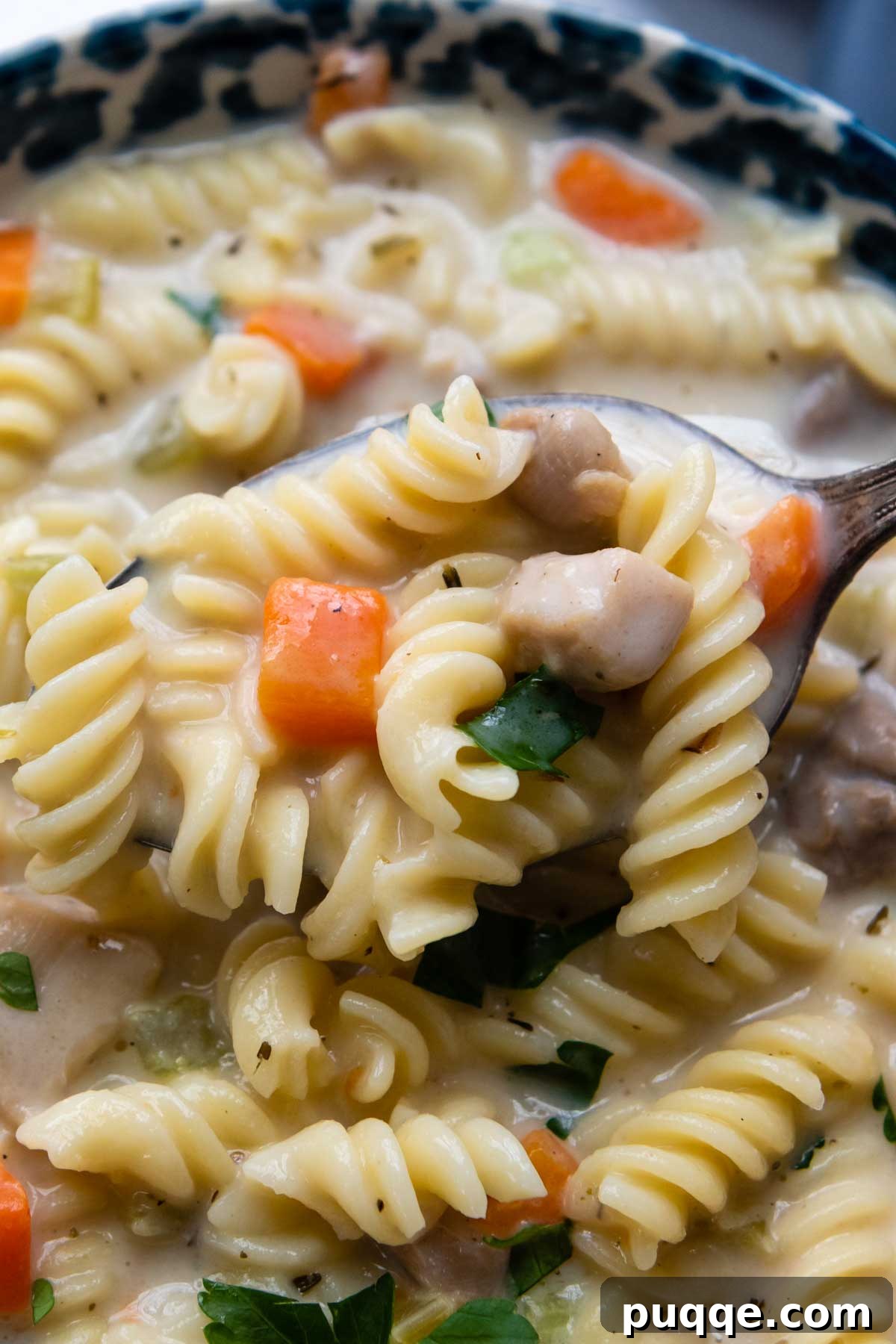
Save This Recipe for Gluten-Free Chicken Noodle Soup!
Don’t let this incredible recipe get lost! Pin this homemade gluten-free chicken noodle soup to your favorite Pinterest board so you can easily find it whenever you need a comforting, delicious, and safe meal.
Let’s be friends on Pinterest! I’m always sharing great recipes!
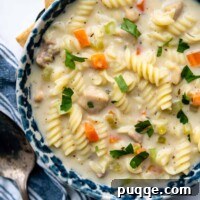
Easy Gluten-Free Chicken Noodle Soup (Best Flavor)
 Melissa Erdelac
Pin Recipe
Ingredients
- 3 tablespoons unsalted butter
- 3 medium carrots, diced
- 3 celery stalks, diced
- 3 garlic cloves, minced
- 1 ½ pounds boneless chicken thighs, cut in bite-sized pieces
- ¾ teaspoon salt
- ¼ teaspoon pepper
- ¼ cup gluten free all purpose flour
- 1 teaspoon dried thyme
- 1 teaspoon onion powder
- ½ teaspoon dried oregano
- 8 cups gluten-free chicken broth
- 12 ounces gluten-free rotini, see notes for alternatives
- 1 cup evaporated milk, see notes for dairy-free
Equipment
-
Santoku Knife
-
Stock Pot
Instructions
- Heat a large stock pot over medium-high heat. Add the butter to melt and stir in the carrots, celery, and minced garlic cloves. Cook for 5 minutes.
- Add the chicken and sprinkle with salt and pepper. Cook until no longer pink on the outside, about 4 minutes. Stir in the gluten-free flour and seasonings.
- Very gradually pour in the broth, stirring constantly and scraping up the browned bits on the bottom of the pan. Bring the broth to a boil.
- Now it’s time to add the GF pasta, but there’s an important note about that. If you don’t think you will eat the entire soup recipe at once, it’s best to boil the noodles separately and add when ready to serve. As the soup is stored, the noodles really soak up the broth, considerably thickening the soup. Plus, they have a tendency to break down upon reheating.
- Once the noodles are added (if cooking in the soup), lower the heat to a simmer and cook for about 6 minutes, stirring occasionally. It’s best to cook to just under al dente because they will finish cooking as they sit in the hot broth.
- Finally, stir in the evaporated milk and serve immediately.
Notes
Dairy-Free Modification
Making a dairy-free soup requires only a couple minor adjustments. First, instead of butter use dairy-free butter sticks or substitute 2 tablespoons olive oil.
The evaporated milk may also be eliminated from the recipe. I particularly love adding a creamy element to soups, but I know that doesn’t work for everyone. If you do want to add a bit of creaminess, consider non-dairy heavy cream, sour cream, or room temp cream cheese (about 2 ounces).
Nutrition Information (per 1½ cup serving):
- Calories: 455kcal
- Carbohydrates: 42g
- Protein: 22g
- Fat: 23g
- Saturated Fat: 8g
- Polyunsaturated Fat: 3g
- Monounsaturated Fat: 8g
- Trans Fat: 0.2g
- Cholesterol: 109mg
- Sodium: 1275mg
- Potassium: 438mg
- Fiber: 2g
- Sugar: 6g
- Vitamin A: 4175IU
- Vitamin C: 3mg
- Calcium: 125mg
- Iron: 2mg