
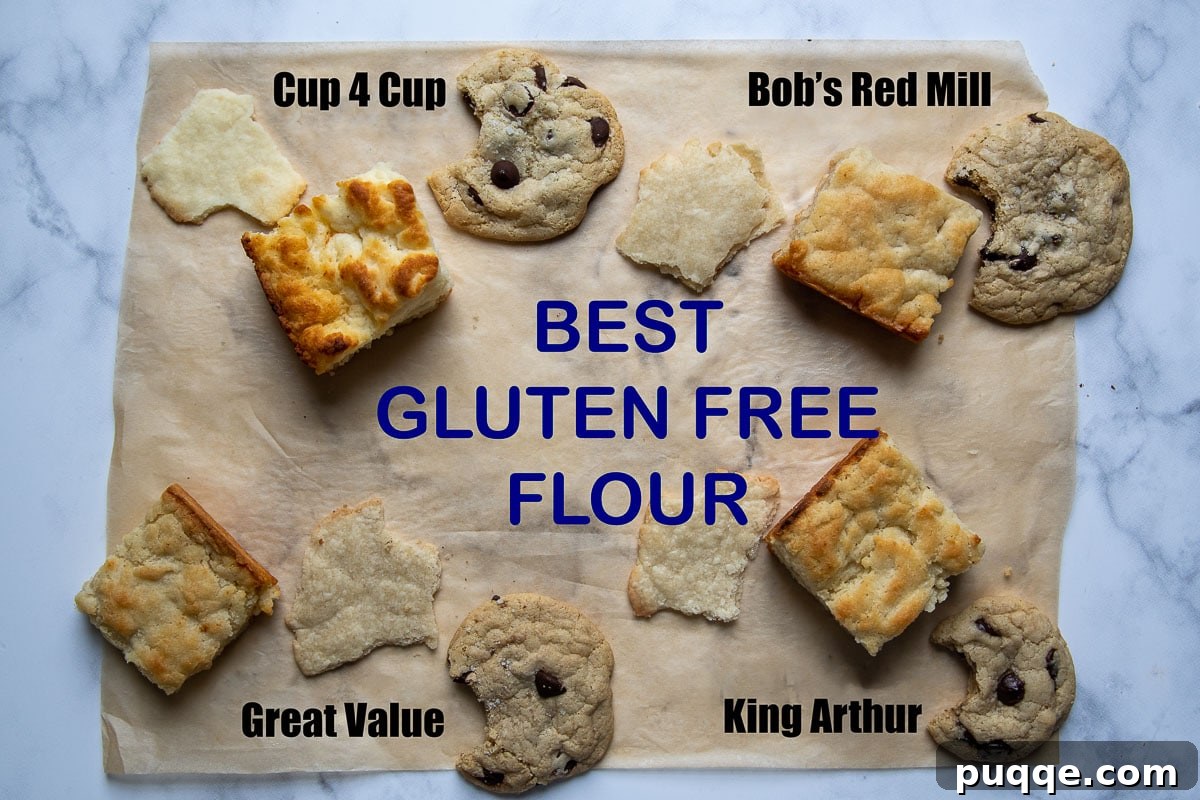
The quest for the best gluten-free flour for baking often feels like an endless journey for enthusiasts and those with dietary restrictions. Whether you’re whipping up a batch of chewy cookies, a decadent cake, fluffy bread, or a flaky pie, finding the right all-purpose flour substitute can make all the difference. This comprehensive guide dives deep into the most popular and widely available gluten-free flour brands, thoroughly testing and comparing them to uncover the ultimate winning blend that consistently delivers delicious results.
Unraveling the Complexity of Gluten-Free Flour Blends
If you’re new to gluten-free baking recipes or striving to perfect your technique, a common question echoes: “What truly is the best gluten-free flour to bake with?” The market has seen an explosion of gluten-free flour substitutes designed to replace traditional wheat flour. While these convenient blends aim to simplify the baking process, eliminating the need to combine multiple individual flours, many still fall short in replicating the taste and texture of their gluten-containing counterparts.
The core challenge lies in the infinite possibilities of starch blends and the varying ratios in which they can be combined. Gluten-free flours behave differently from wheat flour because they lack gluten, the protein network that provides elasticity and structure to baked goods. This absence means that not all gluten-free flour blends are created equal, leading to significant differences in baking outcomes. Our extensive testing, refined over years of developing recipes for this site and authoring a gluten-free cookbook, continually highlights these discrepancies.
For example, while white rice flour offers a neutral taste, it often imparts a gritty texture. Flours like sorghum, buckwheat, and teff can introduce strong, sometimes off-putting, earthy flavors that dominate the final product. Conversely, tapioca flour and oat flour possess a more neutral flavor profile but require complementary starches to build the necessary elasticity and structure. A well-formulated gluten-free flour blend typically combines various starches such as rice flour (white or brown), tapioca starch, potato starch, coconut flour, and cornstarch. The goal is to balance these components to create the best gluten-free flour that mimics wheat flour’s characteristics. However, many commercially available products often miss the mark, resulting in disappointing baked goods.
For years, I have been a staunch advocate for Cup4Cup gluten-free flour due to its remarkable ability to mimic the taste and texture of all-purpose wheat flour, consistently yielding excellent baking results. Yet, other gluten-free flour blends also boast dedicated users. This led to a crucial question that necessitated rigorous investigation: is Cup4Cup truly the best, or are there other contenders?
Understanding Common Problems with Gluten-Free Flour in Baking
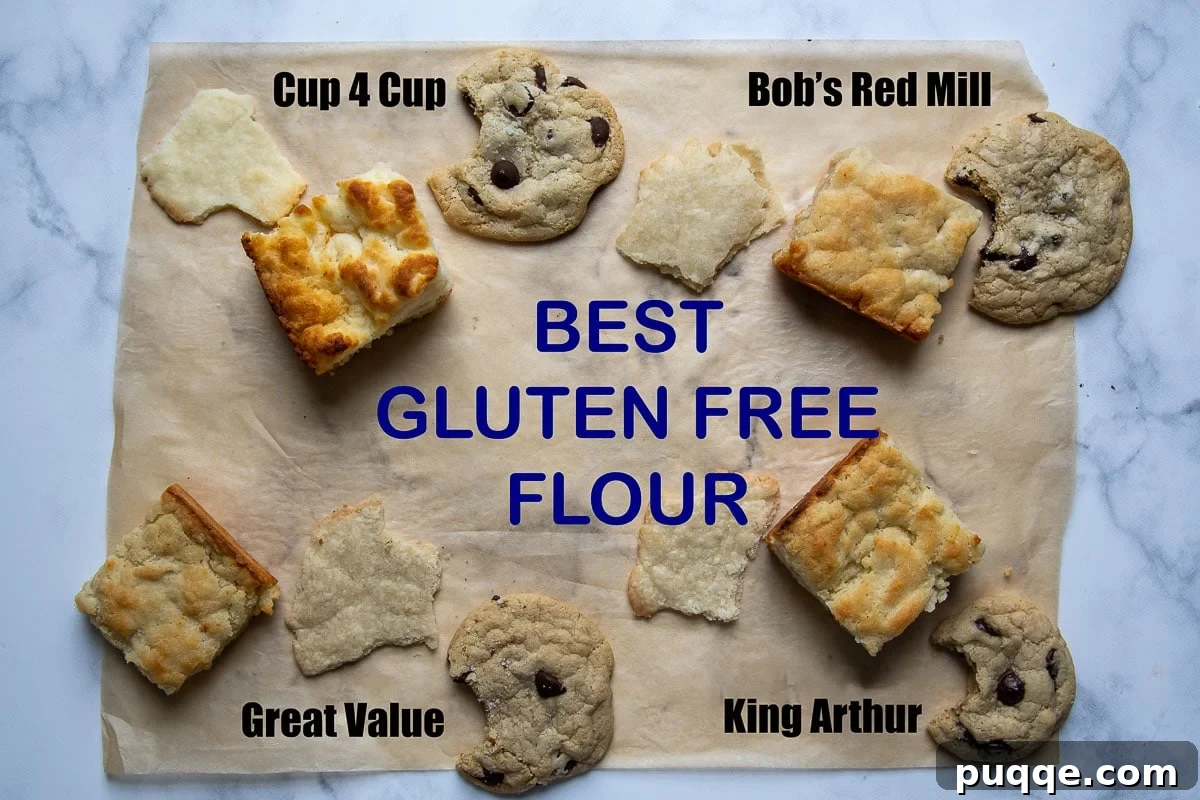
To definitively answer which gluten-free flour reigns supreme, we embarked on a comprehensive testing journey. We evaluated four popular and widely available store-bought flours: Cup4Cup, Bob’s Red Mill 1-to-1, King Arthur’s Measure-for-Measure, and Walmart’s Great Value Gluten-Free Flour Mix. To ensure a diverse range of results, each flour was meticulously tested with different baking recipes – specifically, gluten-free biscuits, gluten-free pie crust, and chocolate chip cookies.
An important consideration was that all the tested flours already included xanthan gum in their mix. Xanthan gum is a crucial ingredient in gluten-free baking, acting as a binder and providing elasticity, much like gluten does in wheat flour. While some gluten-free flours omit it, allowing bakers to customize the amount based on their specific recipe (e.g., more for bread, less for pie crust), our objective was to identify an easy, 1-to-1 flour substitute that could be used interchangeably with all-purpose wheat flour, making it ideal for everyday baking without complex adjustments.
To eliminate any potential bias towards my historically preferred brand, we enlisted friends and family for rigorous “blind taste tests.” This ensured that the evaluations were based purely on taste, texture, and overall appeal. Our goal was to find the best gluten-free flour that could effectively overcome some of the most common pitfalls associated with gluten-free baking:
- Gritty Texture: This is a frequent complaint, typically stemming from a high proportion of coarser grain flours, such as rice flour, in the blend. A superior blend achieves smoothness without sacrificing structure.
- Gumminess: Gluten-free flours often absorb liquids differently than wheat flour. If the balance is off, or if the flour struggles with liquid absorption, it can lead to a dense, unpleasantly gummy texture in baked goods.
- Difficulty Holding Shape / Excessive Spreading: The lack of gluten also affects how fats are absorbed and how structure is maintained. This is why gluten-free cookies, for instance, have a notorious tendency to spread much more than their traditional counterparts. A good flour blend helps combat this.
- Unpleasant Aftertaste: Certain gluten-free flours, like teff or sorghum, possess very strong, distinct flavors. If these are not balanced correctly within a blend, they can leave an unappealing aftertaste that detracts from the overall enjoyment of the baked item.
Considering Allergens and Ingredients in Gluten-Free Flour
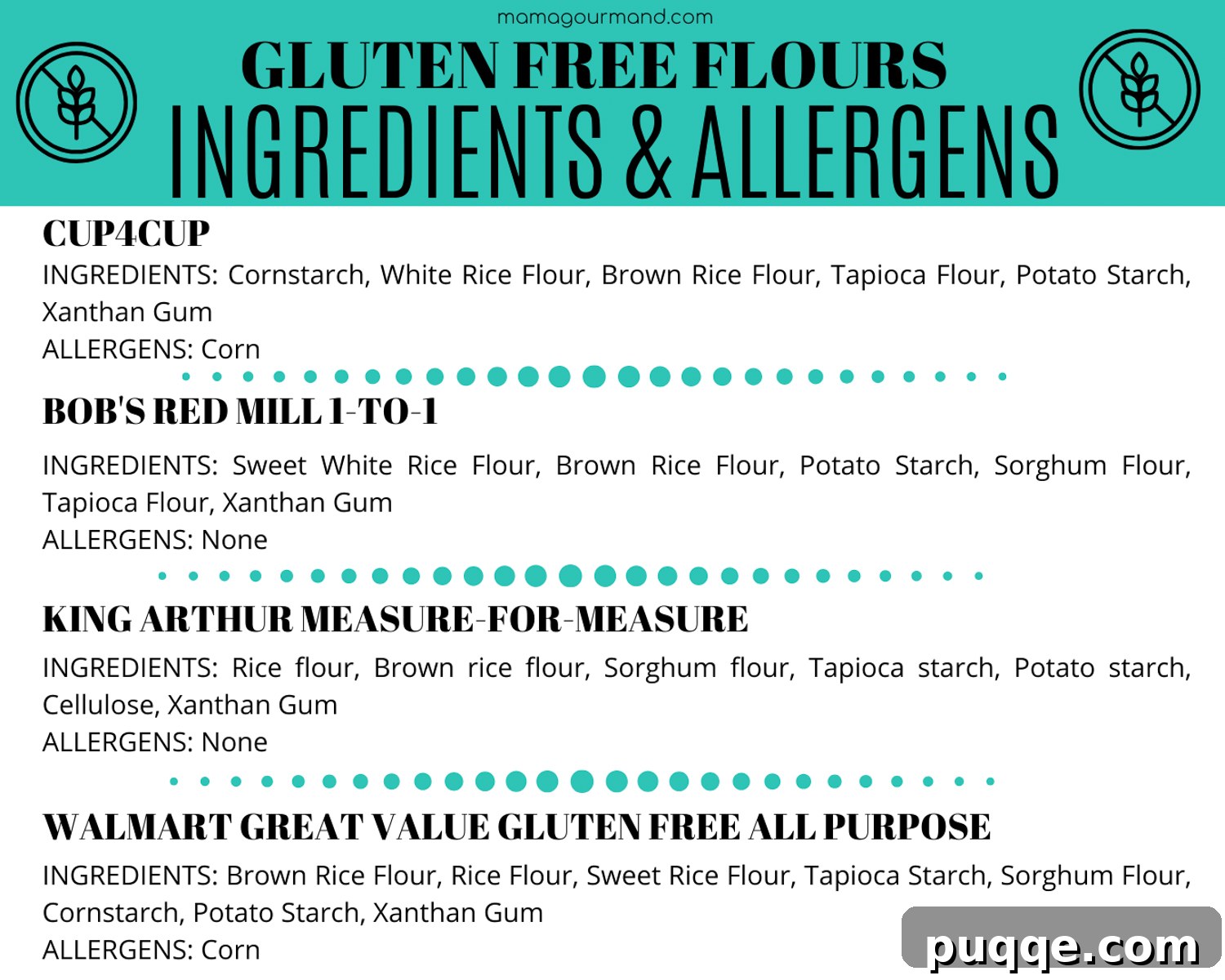
For individuals adhering to a gluten-free diet, it’s not uncommon to manage other food allergies simultaneously. Common allergens such as dairy, corn, or oats can often be hidden ingredients in various baking mixes. When choosing a gluten-free flour, it’s paramount to ensure you are not inadvertently introducing additional allergens into your recipes. Therefore, before making a final decision on which gluten-free flour is best, always scrutinize its ingredient list.
It is crucial to remember that flours containing rye, barley, or wheat cannot be legally or safely labeled as gluten-free. Always look for certified gluten-free labels to ensure cross-contamination has been minimized, providing true peace of mind for those with celiac disease or severe gluten sensitivities.
Price, Availability, and Value: Where to Buy the Best Gluten-Free Flour
While the gluten-free market is saturated with options, our comparison focused on the top four widely available brands that can be easily found at local grocery stores, on Amazon, or through online retailers like Vitacost. Accessibility and cost-effectiveness are key factors for regular gluten-free bakers.
For optimal pricing, purchasing in bulk often proves most beneficial, significantly reducing the cost per ounce. Websites like Vitacost frequently offer coupon codes to their email subscribers. Strategically ordering enough bags to qualify for free shipping and applying a coupon can make a substantial difference in the overall price per bag, maximizing your savings on quality gluten-free ingredients.
Cup4Cup – This premium blend is widely available at Target, Amazon, and Vitacost. Typically priced around $8.99 for a 32-ounce bag, it comes to approximately $0.28 per ounce. Both Amazon and Vitacost also offer larger 3-pound bags, maintaining a consistent price per ounce.
Bob’s Red Mill 1-to-1 – A popular choice found at Target, most local grocery stores, Amazon, and Vitacost. A 44-ounce bag typically costs about $8.59, making it a more economical option at roughly $0.20 per ounce.
King Arthur Measure-for-Measure – Another well-regarded brand available at Target, local grocery stores, and Amazon. At $8.99 for a 48-ounce bag, it offers excellent value at approximately $0.19 per ounce, making it one of the most cost-effective premium options.
Great Value Gluten-Free Flour Mix – This budget-friendly option is exclusively available at Walmart. Priced at $2.98 for a 22-ounce bag, it stands out as the most economical choice at about $0.14 per ounce.
Cookie Testing: The Best Gluten-Free Flour for Chocolate Chip Cookies
To rigorously test the flours in a classic baking scenario, we used a traditional, non-GF chocolate chip cookie recipe. The dough was prepared and baked without prior chilling, allowing us to observe each flour’s inherent performance under standard conditions.
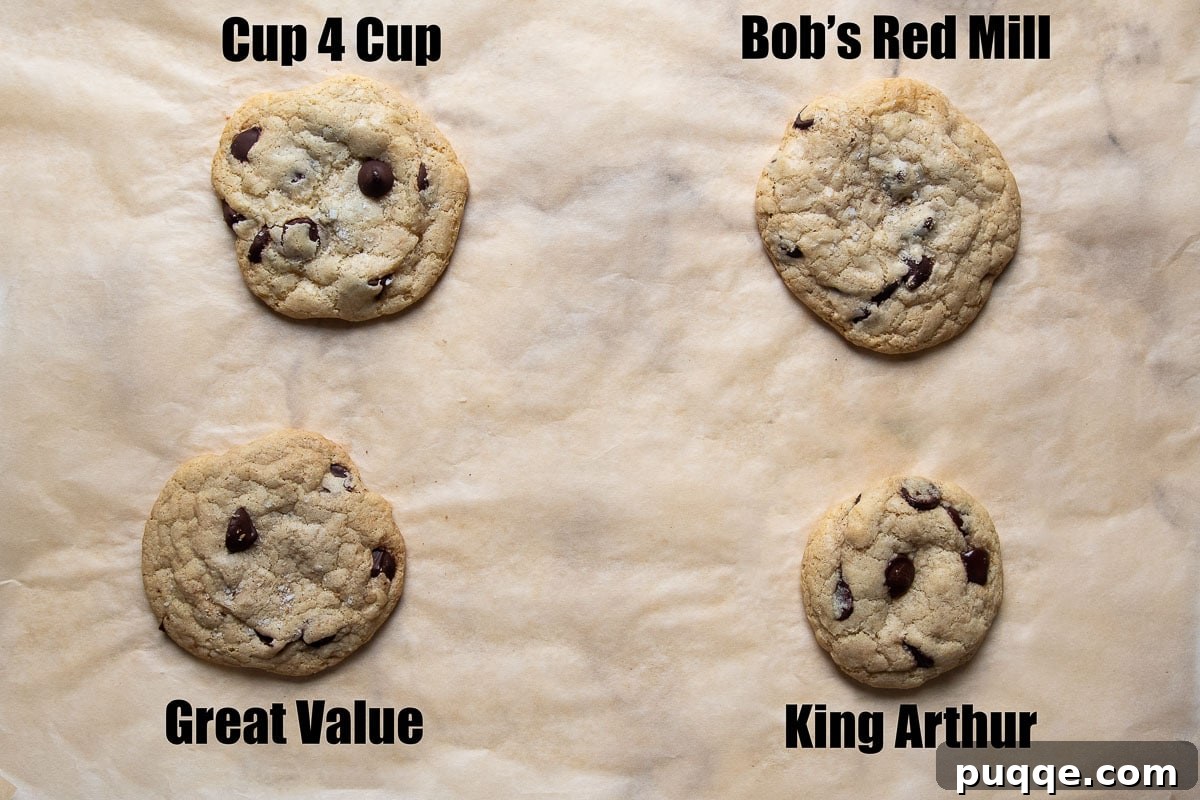
Bob’s Red Mill 1-to-1 – The raw cookie dough made with Bob’s Red Mill was noticeably thinner compared to all other doughs. Initially, there was hesitation to even bake them, fearing they would spread into a single, congealed mass on the baking sheet. Surprisingly, they did not entirely run together, but these cookies exhibited the most significant spreading. Across all blind taste testers, the flavor was unanimously ranked as the worst. It presented a strong, distinct aftertaste and a drier, gritty texture. Overall ranked #4.
Great Value Gluten-Free Flour Mix – This dough demonstrated commendable ability to hold its shape. Furthermore, the baking time required was the most accurate, whereas other cookie batches often needed an additional couple of minutes. The final baked cookie maintained its form well, but the texture was considerably drier, quite brittle, and not particularly pleasant to eat. Overall ranked #3.
King Arthur Measure-for-Measure – The raw dough achieved a consistency that closely resembled “regular” (wheat) cookie dough, and its shape was excellently maintained throughout the baking process. This flour appeared to be highly effective at absorbing fats, thereby mitigating any issues with excessive spreading. Visually, these cookies were indistinguishable from their gluten-containing counterparts. While the cookie itself was pleasantly chewy, it unfortunately had an unappealing gritty taste that detracted from the experience. Overall ranked #2.
Cup4Cup – The dough prepared with Cup4Cup was slightly thinner than typical cookie dough. Although there was an initial temptation to add a couple more tablespoons of flour or chill the dough, we resisted to avoid skewing the test results. Due to the slightly thinner consistency, the cookies did spread a little more and required an extra minute of baking time. However, the taste was overwhelmingly voted as the best among all contenders. The cookies were delightfully chewy, presented no discernible aftertaste, and many testers commented that they would never have guessed they were gluten-free. Overall ranked #1.
Best Gluten-Free Flour for Breads, Biscuits, and Pizza Crusts
To assess the flours’ performance in more bread-like applications, particularly crucial for gluten-free bread recipes, we utilized a pan biscuit recipe. This method is analogous to a quick bread recipe, free from yeast, making it an excellent medium for evaluating the intrinsic taste and texture of the flour blend. Biscuits, much like bread, incorporate a significant amount of flour and lack strong flavors or textures from other ingredients that might mask any inherent flaws in the flour, unlike cookies or brownies.
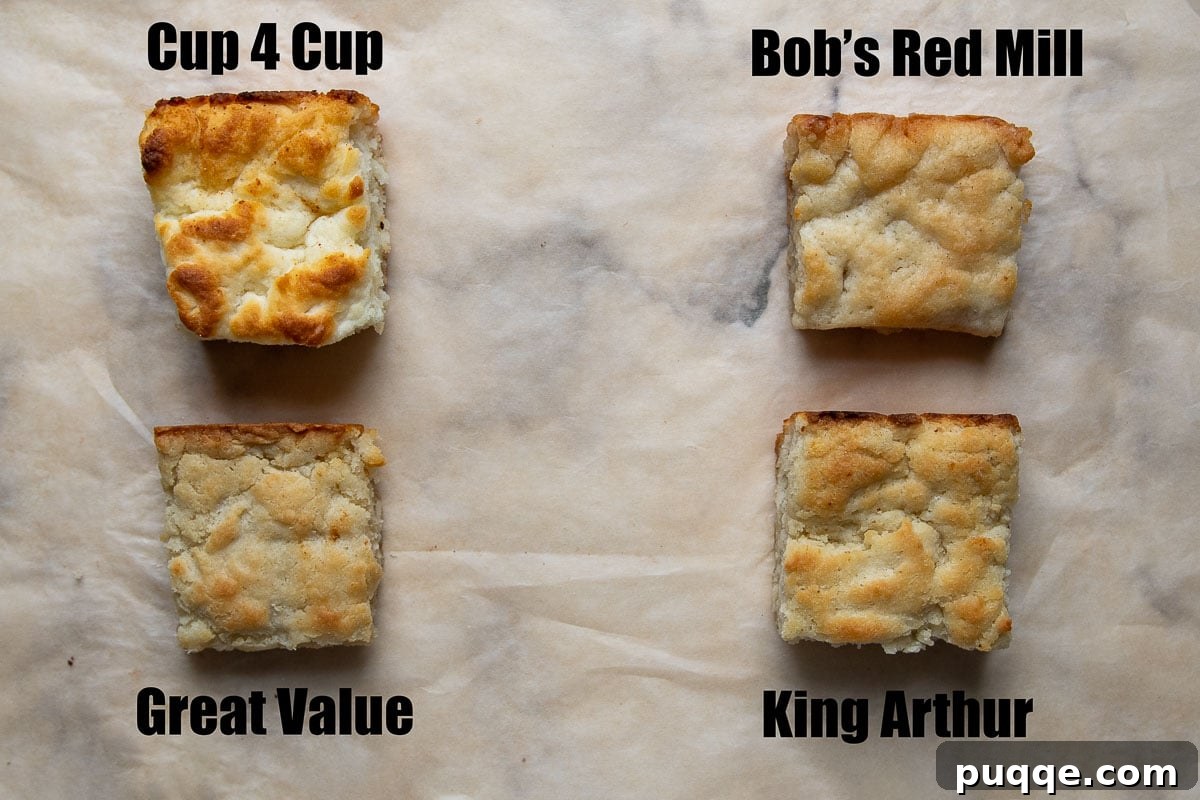
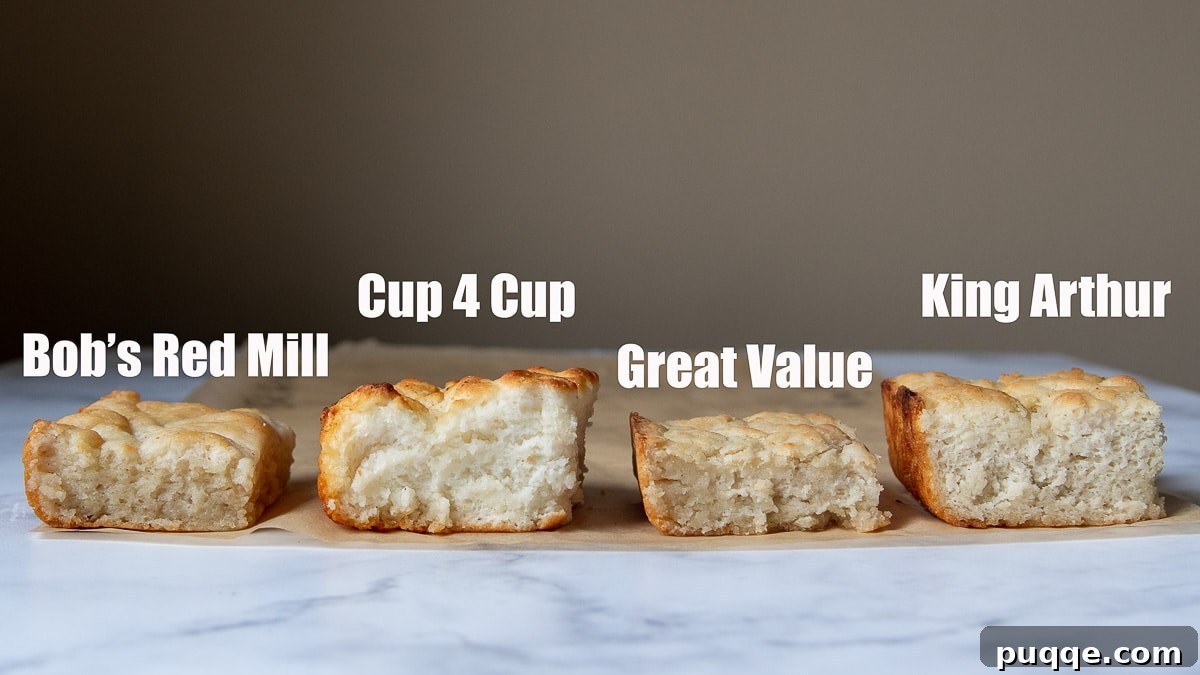
Bob’s Red Mill 1-to-1 – Following baking, the biscuits produced with this flour exhibited a very dense and unfortunately gummy texture. The chewiness was so pronounced that they were almost inedible. Consistent with our cookie test, there was also a very strong and undesirable aftertaste. Overall ranked #4.
Great Value Gluten-Free Flour Mix – This brand tied for the lowest ranking in the biscuit test. The texture was similarly dense, though perhaps not quite as profoundly gummy as Bob’s Red Mill. Much like Bob’s Red Mill, it left a strong, unappealing aftertaste. Overall ranked #4.
King Arthur Measure-for-Measure – Visually, these biscuits baked beautifully, achieving an impressive height and appearing remarkably fluffy. However, despite their appealing appearance, the taste was notably dry and grainy. While these biscuits might perform adequately when drenched in a rich layer of gravy, consuming them plain was not a pleasant experience. Overall ranked #2.
Cup4Cup – Similar to King Arthur, the rise of the Cup4Cup biscuits was very appealing. The interior texture was light and fluffy, and most importantly, they tasted remarkably like traditional wheat-based biscuits, completely free from any grittiness or unpleasant aftertaste. This blend truly delivered on the promise of a superior gluten-free quick bread. Overall ranked #1.
Pillsbury Gluten-Free – During the development of my gluten-free bread recipe, I also tested the Pillsbury GF brand, as many readers had inquired about its performance. Although my experience is limited to bread, it performed quite poorly. The resulting bread was dry and largely inedible, leading me to discontinue further testing with this brand in other recipes.
Pie Crust Testing: The Ultimate Test for Gluten-Free Flours
Crafting a successful pie crust with gluten-free flour stands as a true litmus test for its overall quality. Much like bread, a pie crust recipe typically contains minimal ingredients that could mask an off-putting taste or undesirable texture inherent to the flour. Beyond flavor, a good gluten-free pie crust must also possess the structural integrity to be easily rolled out and shaped into a pie dish without crumbling or tearing. This challenge makes it an excellent indicator of a blend’s robustness.
For each crust, we meticulously followed the same pie crust recipe and measurements. However, it was evident that some flours excelled more than others in adequately covering the pie dish and maintaining integrity. For those seeking alternative pie crust recipes (such as low-carb, dairy-free, or no-bake options) and an array of incredible pie fillings, be sure to explore THE BEST GLUTEN-FREE PIE RECIPES!
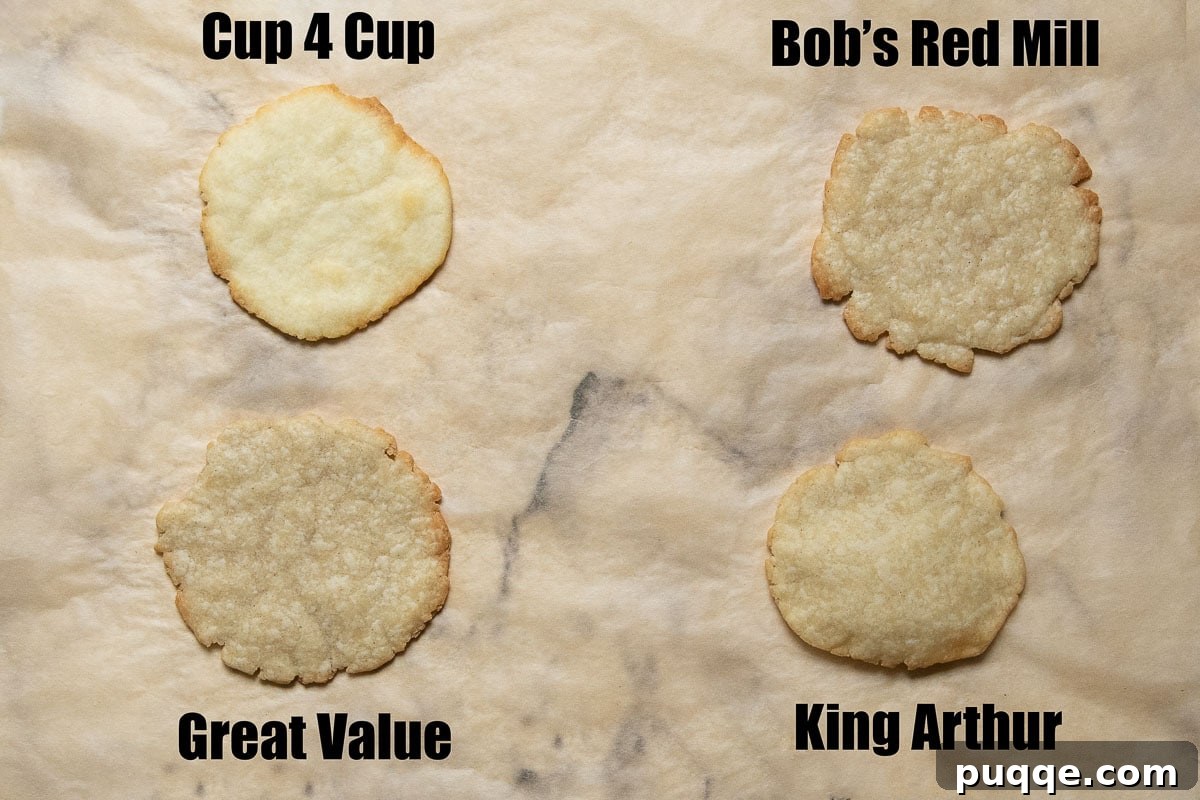
King Arthur Measure-for-Measure – The dough prepared with King Arthur was notably dry during the initial mixing process, necessitating the addition of more liquid to achieve a cohesive texture. Once sufficiently hydrated, it rolled out with ease but provided only a thin coverage for the pie dish. The baked crust exhibited a chewy and dense texture, though it was devoid of any off-putting flavors. Overall ranked #4.
Bob’s Red Mill 1-to-1 – This dough presented challenges during rolling, cracking significantly, but it eventually came together nicely once it had warmed up slightly. It provided good, adequate coverage for the pie dish. The baked texture was dense, almost akin to a shortbread, and it carried a rustic, whole-grain taste. Overall ranked #3.
Great Value Gluten-Free Flour Mix – The Great Value dough proved very easy to roll out and offered superior coverage for the pie dish compared to some others. The baked crust was crispy and flakier in texture; however, its taste was rather lackluster and not particularly memorable. Overall ranked #2.
Cup4Cup – While the Cup4Cup dough was easy to roll, it was also the thinnest and required the most stretching to fully cover the pie plate. Despite this, its baked texture was remarkably flaky and incredibly easy to cut through, a stark contrast to the denser results from other flours. It boasted a buttery, light taste, so appealing that the crust edges were consistently eaten, a common leftover with other brands. Overall ranked #1.
The Ultimate Verdict: Best Gluten-Free All-Purpose Flour!
After extensive and rigorous testing across various baking applications—cookies, biscuits (a representation of quick breads), and pie crusts—Cup4Cup gluten-free flour emerges as the clear and undisputed winner in terms of consistently delivering superior taste and texture that closely mimics traditional wheat-based baked goods.
However, it is important to note that Cup4Cup is also typically the most expensive flour among the brands tested. If you are willing to invest a little more, you are virtually guaranteed a high-quality flour that genuinely replicates the familiar taste and desired texture of traditional baked goods, making it a worthy splurge for those who prioritize results.
The primary drawback of Cup4Cup is its ingredient list, which includes common allergens such as dairy and corn. For bakers with these specific dietary restrictions, King Arthur Measure-for-Measure stands out as an excellent runner-up. This blend performs commendably and is a fantastic alternative for those avoiding dairy or corn. In fact, King Arthur Measure-for-Measure has been observed to perform exceptionally well in recipes that benefit from more spread, such as fluffy pancakes made with gluten-free flour.
Another viable option for gluten-free baking is to forgo a pre-made gluten-free flour mix altogether and bake directly with almond flour or almond meal. Almond flour offers a distinct sweet, nutty flavor, is naturally low in carbohydrates, and boasts a high protein content, making it a popular choice for specific dietary needs. However, it’s crucial to understand that almond flour is not a one-to-one conversion for all-purpose flour or even for gluten-free flour blends. Its unique properties require specific recipe formulations. Therefore, it is best utilized in recipes that have been specifically developed and tested with almond flour, many of which can be found in our comprehensive best almond flour recipes post.
Tips for Effortlessly Successful Gluten-Free Baking
Beyond selecting the right flour, a few fundamental practices can significantly enhance your gluten-free baking success:
- Weigh Your Flour: Gluten-free flours vary in density. Using a kitchen scale for precise measurements (grams) rather than volume (cups) ensures consistent results every time.
- Allow Dough to Rest: Gluten-free doughs often benefit from a short rest period (15-30 minutes) before baking. This allows the starches to fully hydrate, leading to a less gritty texture and better structure.
- Adjust Liquids Carefully: Gluten-free flours can absorb liquid differently. Start with the recipe’s recommended amount, but be prepared to add a tablespoon or two more liquid if the dough seems too dry, or a bit more flour if it’s too wet.
- Avoid Overmixing: While gluten-free doughs don’t develop gluten, overmixing can still lead to tough or crumbly results. Mix just until combined.
- Monitor Baking Time: Gluten-free baked goods can sometimes brown faster or take slightly longer to bake through. Keep an eye on your oven and adjust baking times as needed.
Now that you are equipped with the knowledge to bake with effortless success, be sure to explore our extensive collection of more than 80 of the best gluten-free dessert recipes to put your newfound flour expertise to delicious use!