
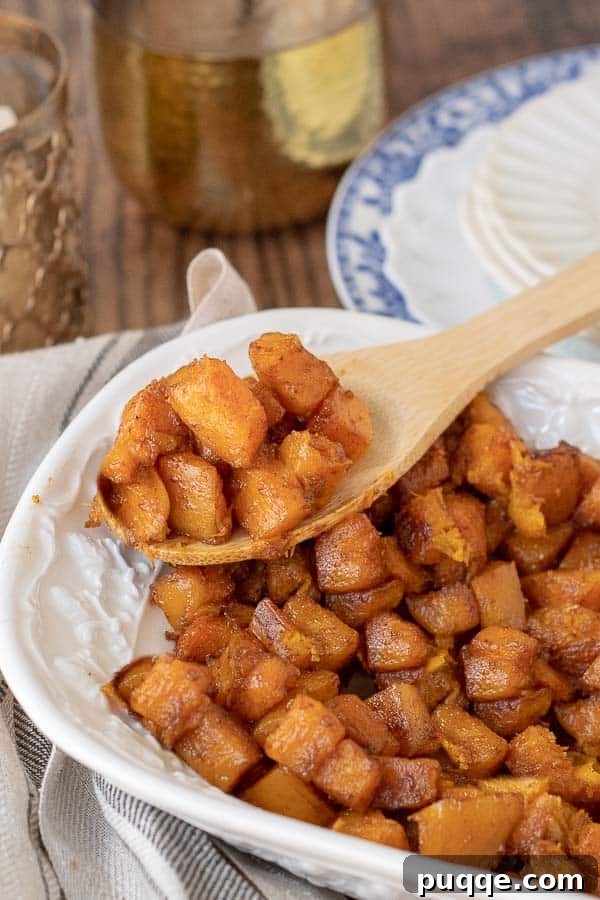
Transform your fall and winter meals with the ultimate easy side dish: Roasted Butternut Squash. This simple yet sensational recipe requires just four core ingredients to create tender, caramelized cubes of squash, kissed with a warming cinnamon-spiced maple glaze. Whether you’re planning an elaborate holiday feast or a cozy weeknight dinner, this vibrant and healthy dish is guaranteed to become a family favorite.
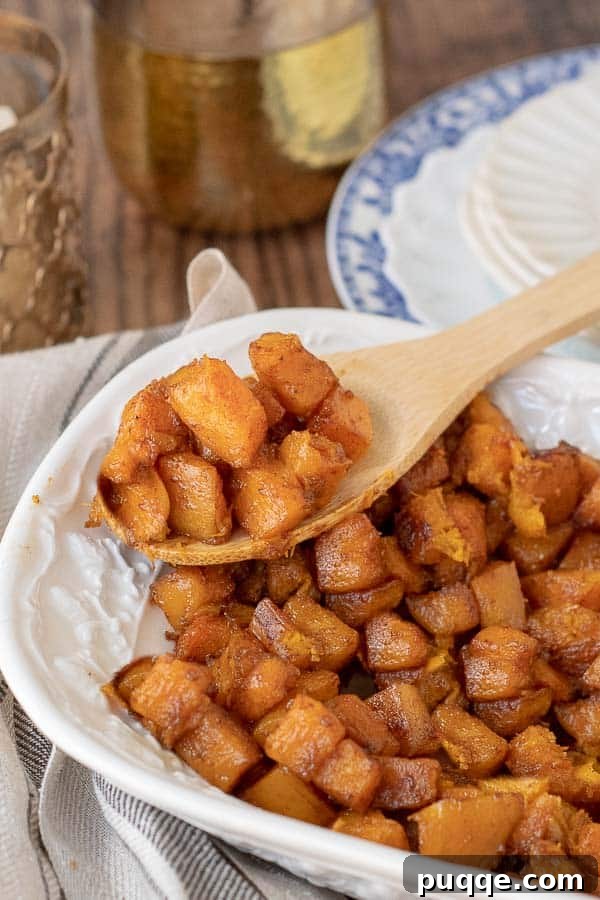
Maple Cinnamon Roasted Butternut Squash: The Perfect Autumn Side Dish
As the leaves begin to turn and the air grows crisp, there’s no better time to embrace the comforting flavors of autumn. Butternut squash, with its rich, sweet, and earthy notes, is a true seasonal star, and roasting it brings out its absolute best. This recipe for roasted butternut squash isn’t just a dish; it’s a celebration of fall, making it a perfect complement to Thanksgiving tables, festive gatherings, or simply a nutritious addition to any meal.
Let’s be honest, finding diverse and delicious side dishes can sometimes feel like a culinary chore. You want something flavorful, healthy, and relatively easy to prepare, without adding unnecessary stress to your cooking routine. That’s where the magic of roasting comes in. Roasting vegetables is arguably one of the simplest and most rewarding cooking methods, transforming humble ingredients into something truly extraordinary with minimal fuss.
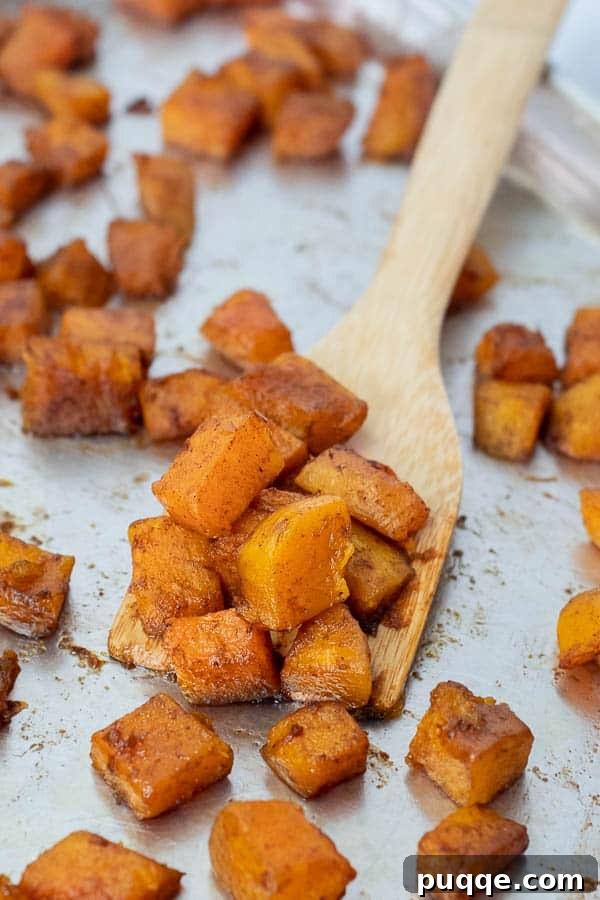
Our Maple Cinnamon Roasted Butternut Squash recipe takes this simple approach and elevates it with a delightful blend of sweet and spice. Imagine perfectly tender squash, its edges caramelized to a golden-brown perfection, infused with the warm embrace of cinnamon and pumpkin pie spice, all finished with a hint of natural sweetness from pure maple syrup. It’s a symphony of flavors and textures that will impress your guests and satisfy your cravings. Plus, it’s a healthy, wholesome dish that everyone can enjoy.
If you’re someone who loves the ease and deliciousness of roasted vegetables, then this recipe will quickly become a staple in your kitchen. And if you’re looking for more inspiration, be sure to explore other effortless side dishes like roasted zucchini, grilled potatoes, and baked broccoli and cheese. But for now, let’s dive into the glorious world of butternut squash!
Why You’ll Love This Roasted Butternut Squash Recipe
Beyond its incredible taste, this roasted butternut squash recipe offers a multitude of benefits that make it an ideal choice for any home cook:
- Effortless Preparation: With just four main ingredients and a straightforward roasting method, this dish is incredibly easy to make, even for novice cooks. Minimal hands-on time means more time to focus on other parts of your meal or simply relax.
- Irresistible Flavor Profile: The combination of naturally sweet butternut squash with aromatic cinnamon, warming pumpkin pie spice, and rich maple syrup creates a harmonious blend that is both comforting and sophisticated. The roasting process intensifies the squash’s natural sugars, leading to those coveted caramelized edges.
- Healthy and Nutritious: Butternut squash is a nutritional powerhouse, packed with vitamins A and C, fiber, potassium, and antioxidants. It’s a fantastic way to add essential nutrients and vibrant color to your plate.
- Versatile Side Dish: This roasted squash pairs beautifully with a wide variety of main courses, from roasted chicken and turkey to pork tenderloin and vegetarian mains. It’s equally at home at a casual family dinner or a festive holiday spread.
- Seasonal Appeal: Embrace the flavors of autumn and winter with this perfectly seasonal dish. Butternut squash is abundant during these months, making it fresh, flavorful, and often more affordable.
The Nutritional Power of Butternut Squash
Butternut squash isn’t just delicious; it’s also incredibly good for you. This winter squash is a nutritional powerhouse, making it a smart choice for a healthy diet. Here’s a breakdown of some of its key health benefits:
- Rich in Vitamins: Butternut squash is an excellent source of Vitamin A (in the form of beta-carotene), which is crucial for vision, immune function, and skin health. It’s also a good source of Vitamin C, a powerful antioxidant that supports the immune system and collagen production.
- High in Fiber: With a significant amount of dietary fiber, butternut squash aids in digestion, helps maintain healthy blood sugar levels, and contributes to a feeling of fullness, which can be beneficial for weight management.
- Abundant in Minerals: It provides essential minerals like potassium, which is vital for blood pressure regulation and nerve function, as well as magnesium and manganese.
- Antioxidant Properties: The vibrant orange color of butternut squash is indicative of its high antioxidant content, including carotenoids like beta-carotene, lutein, and zeaxanthin. These antioxidants help protect cells from damage caused by free radicals, potentially reducing the risk of chronic diseases.
- Low in Calories: Despite its rich flavor and satisfying texture, butternut squash is relatively low in calories, making it a fantastic ingredient for a balanced diet.
Incorporating roasted butternut squash into your meals is a simple and delicious way to boost your nutrient intake and enjoy wholesome, flavorful food.
How to Make Maple Cinnamon Roasted Butternut Squash: A Step-by-Step Guide
Creating this delicious side dish is surprisingly simple. Follow these detailed steps to achieve perfectly tender, caramelized, and flavorful butternut squash every time.
- Preheat Your Oven: Start by preheating your oven to a robust 425ºF (220ºC). A high temperature is key for achieving that desirable caramelization and crisp exterior on the squash.
- Prepare the Squash for Roasting: Once your butternut squash is peeled and cubed into approximately 1-inch pieces (we’ll cover how to cut it safely below!), divide the cubes evenly between TWO large baking sheets. This crucial step prevents overcrowding, which can cause the squash to steam instead of roast, leading to a mushy texture. You want a single layer with a little space between each cube for optimal air circulation.
- Season Generously: Drizzle the cubed butternut squash with olive oil. Then, sprinkle generously with salt, pepper, and pumpkin pie spice. Toss everything together directly on the baking sheets with your hands or a spatula, ensuring every piece of squash is thoroughly coated in the oil and seasonings.
- First Bake: Place the baking sheets in the preheated oven and bake for 20 minutes. The squash will start to soften and develop some color.
- Flip and Continue Baking: After 20 minutes, remove the baking sheets from the oven. Using a spatula, flip and toss the squash cubes to ensure even cooking and browning. Return them to the oven and bake for another 10-15 minutes, or until the squash is fork-tender inside and beautifully toasted and caramelized on the outside.
- Maple Glaze and Serve: Once the squash is perfectly roasted, remove it from the oven. Immediately, drizzle the pure maple syrup over the warm squash cubes and toss gently to coat. The warmth of the squash will help the maple syrup adhere and create that irresistible glaze. Serve hot and enjoy!
Mastering the Art of Cutting a Butternut Squash
For many, the most daunting part of preparing butternut squash is cutting it. Its firm flesh and unique shape can be a bit challenging initially, but with the right technique, it becomes much easier. Achieving even-sized cubes is important for uniform cooking. Here’s a detailed, step-by-step guide to safely and efficiently cut your butternut squash:
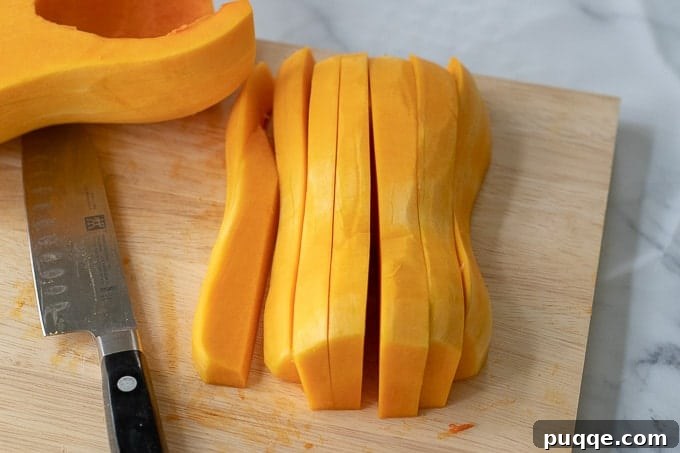
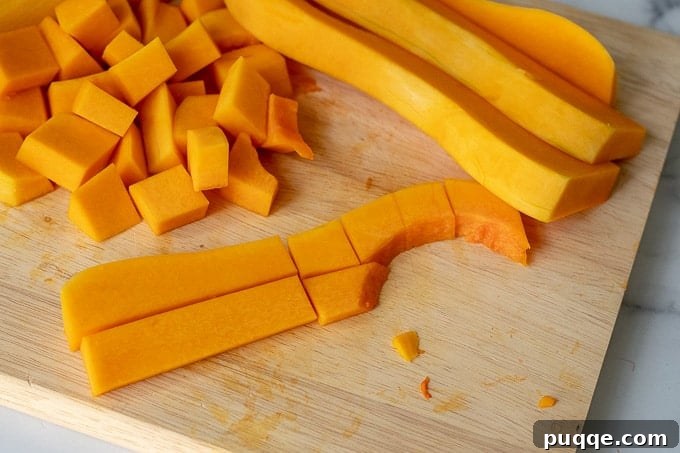
- Prepare for Peeling: Start by washing the exterior of the squash thoroughly. For easier handling, you can microwave the whole squash for 2-3 minutes to slightly soften the skin, but this is optional.
- Peel the Skin: Using a sturdy vegetable peeler, carefully remove the tough outer skin from the entire butternut squash. Work slowly and peel away from yourself to prevent accidents.
- Trim the Ends: With a large, sharp chef’s knife, carefully cut off the top stem end and the bottom blossom end of the squash. This creates two flat, stable surfaces, making the squash easier and safer to handle.
- Halve the Squash: Stand the squash upright on one of its flat ends. Carefully and firmly cut the squash down the middle vertically, splitting it into two halves. This requires a sharp knife and a stable cutting surface.
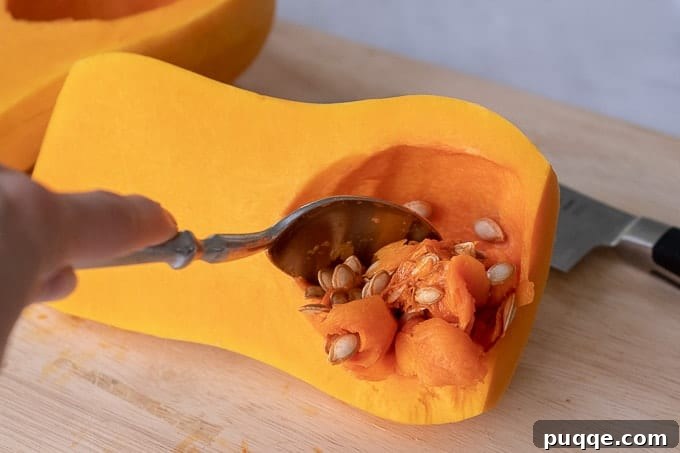
- Scoop Out Seeds and Pulp: Use a spoon (a sturdy metal spoon works best) to scrape out all the seeds and fibrous pulp from the rounder, bulbous end of each squash half. You can discard these or save the seeds for roasting if desired.
- Cut into Strips: Place each squash half cut-side down on your cutting board for stability. Cut each half lengthwise into long, straight pieces, aiming for strips about 1 inch thick. The neck of the squash will yield uniform strips, while the bulbous end might require cutting into larger, irregular pieces first, then trimming them into strips.
- Dice into Cubes: Lay the strips flat. Then, cut across the strips to create 1-inch butternut squash cubes. Try to keep the cubes as uniform in size as possible to ensure they cook evenly.
Once you’ve mastered the cutting process, the rest is smooth sailing! Always exercise caution when using a sharp knife, and ensure your cutting board is stable.
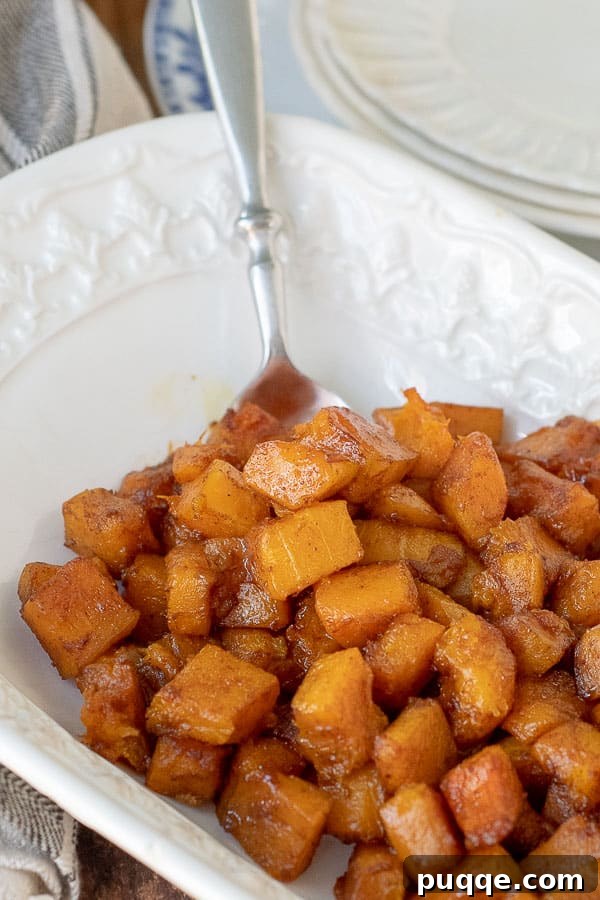
Expert Tips for Perfectly Roasted Butternut Squash
Achieving perfectly roasted butternut squash is all about a few key techniques. Keep these professional tips in mind for consistently delicious results:
- Don’t Overcrowd the Pan: This is arguably the most important tip. Dividing the squash between two sheet pans allows hot air to circulate freely around each piece, promoting caramelization and creating that desirable crispy exterior. If the pieces are too close together, they will steam instead of roast, resulting in a mushy texture.
- Add Maple Syrup AFTER Roasting: For the best texture, drizzle the maple syrup on after the squash has finished baking. If the squash is roasted with the maple syrup from the start, the syrup can form a barrier that prevents the squash from getting a crispy, toasted exterior. Adding it at the end allows it to glaze beautifully without hindering the roasting process.
- Line Baking Sheets for Easy Cleanup: Make your life easier by lining your baking sheets with parchment paper. This prevents sticking and makes cleanup a breeze.
- Customize Your Spices: While pumpkin pie spice provides a wonderful fall flavor, feel free to experiment. If you don’t have pumpkin pie spice, a single teaspoon of ground cinnamon makes an excellent substitute. Other warm spices like nutmeg, ginger, or a pinch of cloves can also be added.
- Sweet or Savory? Your Choice! For a more savory profile, simply skip the maple syrup. The roasted squash will still be incredibly delicious, with its natural sweetness highlighted by the spices. You can also add dried herbs like thyme, rosemary, or sage for an earthy twist.
- Keep it Simple: For a basic yet delicious roasted winter squash, just toss the cubes with olive oil, salt, and black pepper. It’s a fundamental flavor that pairs with almost anything.
- Serving for Thanksgiving or Holidays: This recipe is fantastic for make-ahead convenience. You can roast the squash earlier in the day. When ready to serve, simply reheat it in a 425ºF (220ºC) oven for about 10 minutes, then toss with the maple syrup just before bringing it to the table.
- Try Brown Sugar Variation: For a different kind of sweet glaze, use brown sugar instead of maple syrup. Sprinkle it over the squash with the olive oil and spices, then roast as directed. The brown sugar will caramelize beautifully as it bakes.
Serving Suggestions for Your Roasted Butternut Squash
This versatile side dish complements a wide array of main courses and can be incorporated into various meals. Here are some ideas for how to serve your delicious Maple Cinnamon Roasted Butternut Squash:
- Classic Holiday Side: It’s a natural fit for Thanksgiving or Christmas dinners, pairing beautifully with roasted turkey, ham, or prime rib.
- Weeknight Meal Enhancer: Serve it alongside roasted chicken, pork chops, or pan-seared fish for a healthy and satisfying weeknight dinner.
- Vegetarian Main: Incorporate it into a grain bowl with quinoa or farro, some greens, and a protein like chickpeas or lentils for a hearty vegetarian meal.
- Salad Topper: Add cooled roasted squash cubes to a fresh fall salad with mixed greens, goat cheese, and candied pecans for an extra layer of flavor and texture.
- Breakfast or Brunch: Believe it or not, leftover roasted butternut squash can be a delightful addition to breakfast hashes or even served alongside scrambled eggs.
- Soup or Stew Base: While this recipe is designed as a side, the flavors are fantastic in pureed butternut squash soups or added to a hearty stew for extra richness.
Storage and Reheating Tips
Have leftovers? No problem! Roasted butternut squash stores well and can be easily reheated to enjoy later:
- Storage: Allow the roasted squash to cool completely before transferring it to an airtight container. Store it in the refrigerator for up to 3-4 days.
- Reheating: For best results, reheat the squash in the oven or an air fryer. Spread the cooled squash on a baking sheet and reheat at 350°F (175°C) for 10-15 minutes, or until warmed through and slightly crisp again. Avoid microwaving if possible, as it can make the squash mushy.
- Freezing: While possible, freezing roasted butternut squash can alter its texture, making it softer upon thawing. If you do freeze it, spread cooled squash in a single layer on a baking sheet, freeze until solid, then transfer to a freezer-safe bag for up to 3 months. Reheat directly from frozen in the oven.
Frequently Asked Questions (FAQs)
Here are answers to some common questions you might have about making roasted butternut squash:
- Can I use frozen butternut squash? Yes, you can! Frozen butternut squash tends to be a bit softer than fresh once roasted, but it still works. Do not thaw before roasting; simply toss the frozen cubes with oil and seasonings and roast. You may need to increase the cooking time by 5-10 minutes.
- What if I don’t have pumpkin pie spice? No worries! As mentioned in the tips, 1 teaspoon of ground cinnamon is a perfect substitute. You can also create your own by mixing cinnamon, a pinch of nutmeg, and a tiny bit of ginger.
- Can I make this recipe savory? Absolutely! Simply omit the maple syrup entirely. You can also add savory herbs like dried thyme, rosemary, or a touch of garlic powder to the initial seasoning mix.
- How do I choose a good butternut squash? Look for a squash that is heavy for its size, has a uniform tan color, and is free of soft spots, blemishes, or green patches.
- Can I prepare the squash ahead of time? You can peel and cut the butternut squash up to 2-3 days in advance. Store the cubes in an airtight container in the refrigerator. This makes meal prep incredibly efficient!
Save this recipe to your Pinterest board!
Let’s be friends on Pinterest! I’m always sharing great recipes!
Did you make this recipe? We love hearing from you! Please consider leaving a star rating and comment below the recipe card. Your feedback helps others discover delicious recipes in our community, and I always appreciate hearing about your cooking adventures! -Melissa
Pumpkin Spice Roasted Butternut Squash

Melissa Erdelac
Prep Time: 10 mins
Cook Time: 30 mins
Total Time: 40 mins
Roasted Butternut Squash has four simple ingredients, but makes one phenomenal, easy side dish recipe. Cubes of baked butternut squash are toasty and caramelized with a cinnamon-spiced maple glaze.
Pin
Ingredients
- 1 medium butternut squash (about 2.5 pounds), peeled and cut into 1″ cubes
- 2 tablespoons olive oil, divided
- 1 teaspoon pumpkin pie spice, divided
- ½ teaspoon salt, divided
- 2 tablespoons pure maple syrup
Instructions
- Preheat oven to 425ºF. Divide cubed butternut squash evenly between TWO baking sheets.
- Drizzle and sprinkle olive oil, pumpkin pie spice, and salt (reserving maple syrup) over the squash on both baking sheets. Toss to combine ingredients and coat the butternut squash with oil and seasonings. Spread squash cubes evenly out on the baking sheets in a single layer.
- Bake for 20 minutes. Remove from oven to flip and toss squash. Bake for 10-15 minutes more, or until butternut squash is tender, toasted, and caramelized. Remove from oven and toss with maple syrup before serving.
Nutrition Information (per serving)
Calories: 116kcal, Carbohydrates: 19g, Protein: 1g, Fat: 4g, Sodium: 199mg, Potassium: 455mg, Fiber: 2g, Sugar: 6g, Vitamin A: 13290IU, Vitamin C: 26.2mg, Calcium: 70mg, Iron: 0.9mg