
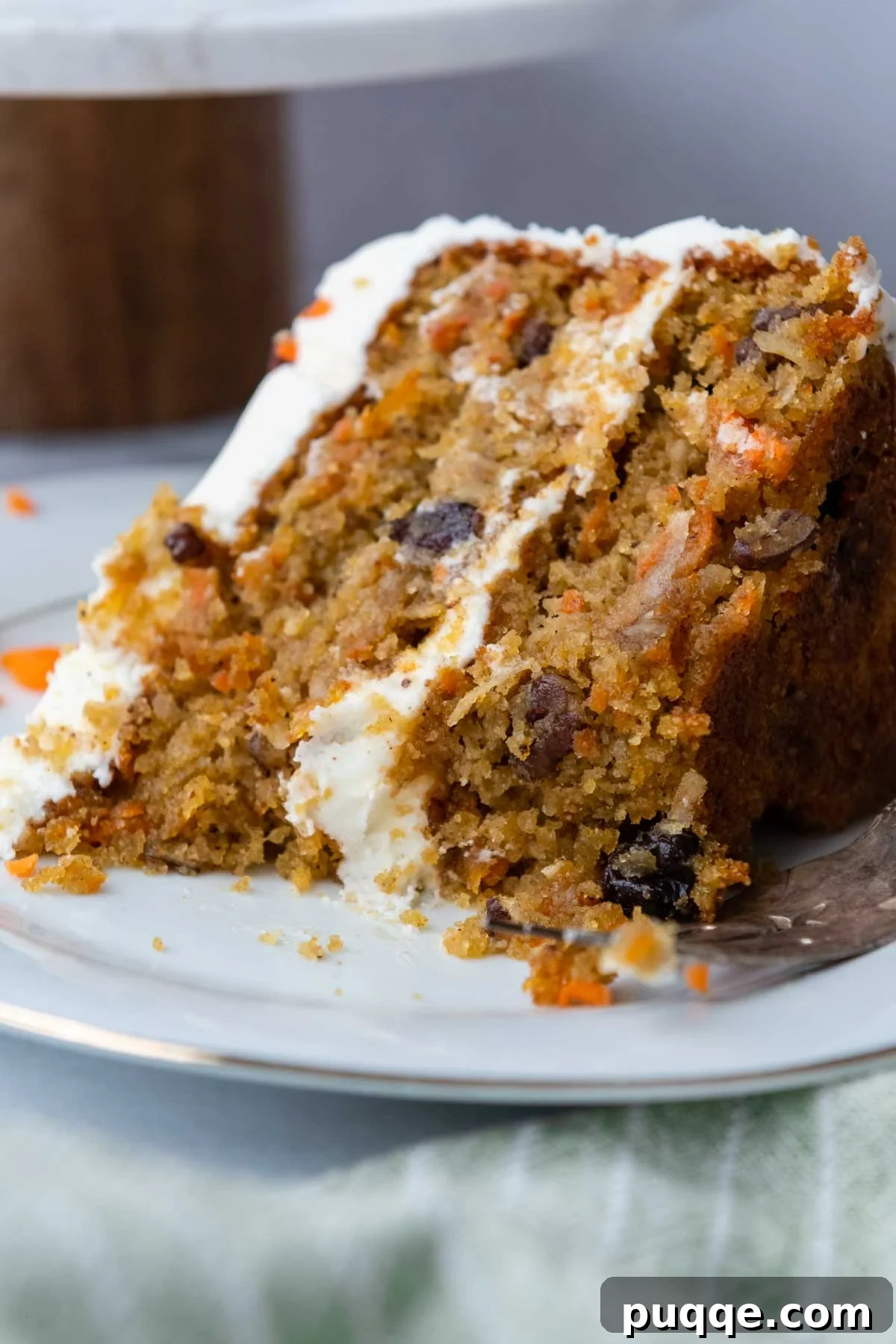
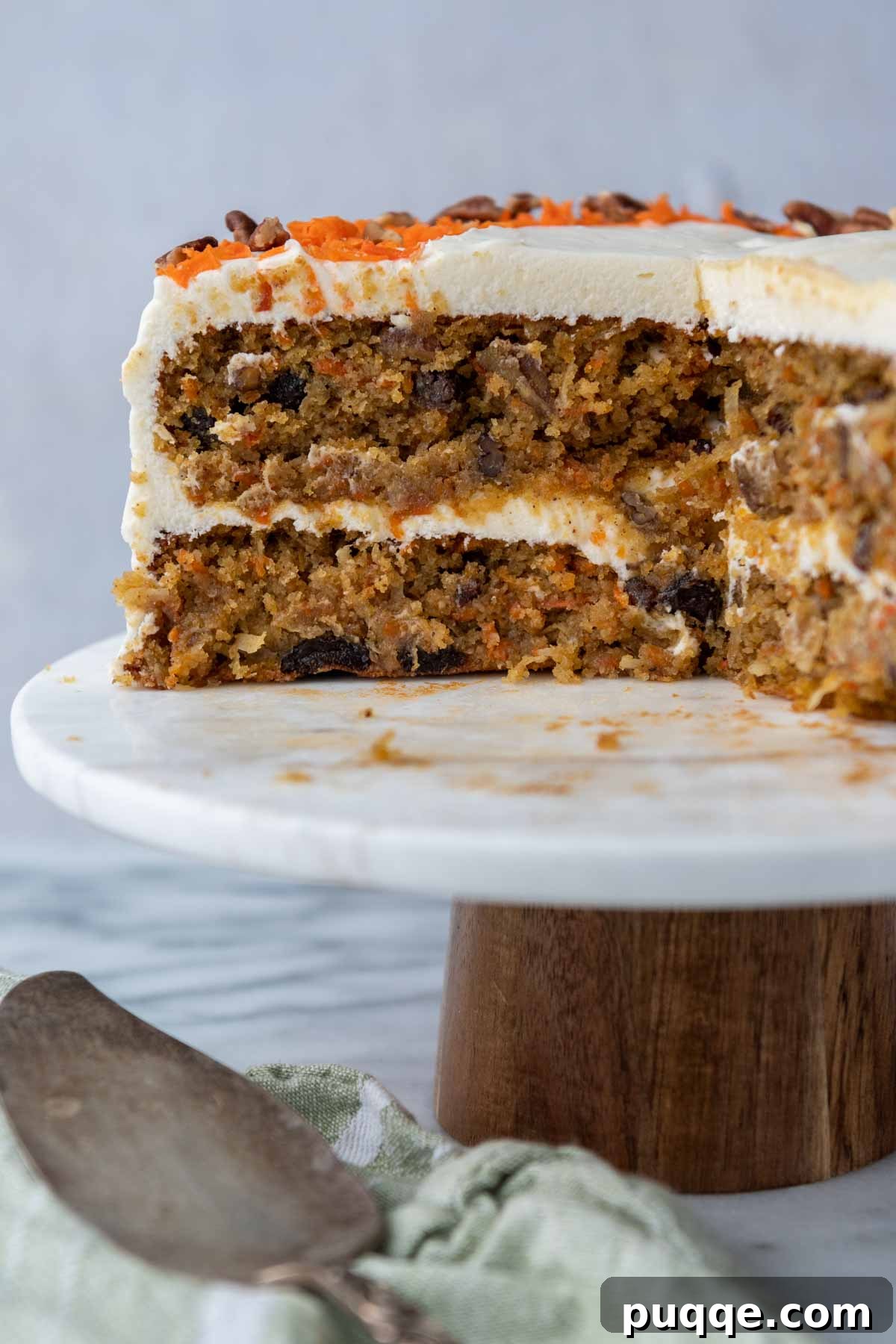
As a seasoned gluten-free baker, I’ve learned that achieving baking perfection with almond flour hinges on a few essential, yet simple, techniques. This carefully crafted recipe for a show-stopping almond flour carrot cake is a testament to those insights, promising an exquisitely moist, wonderfully fluffy texture, and a perfectly spiced flavor profile that will delight everyone, even those without gluten sensitivities. Prepare to uncover the secrets to creating the ultimate gluten-free carrot cake, leveraging the expert baking tips detailed right here.
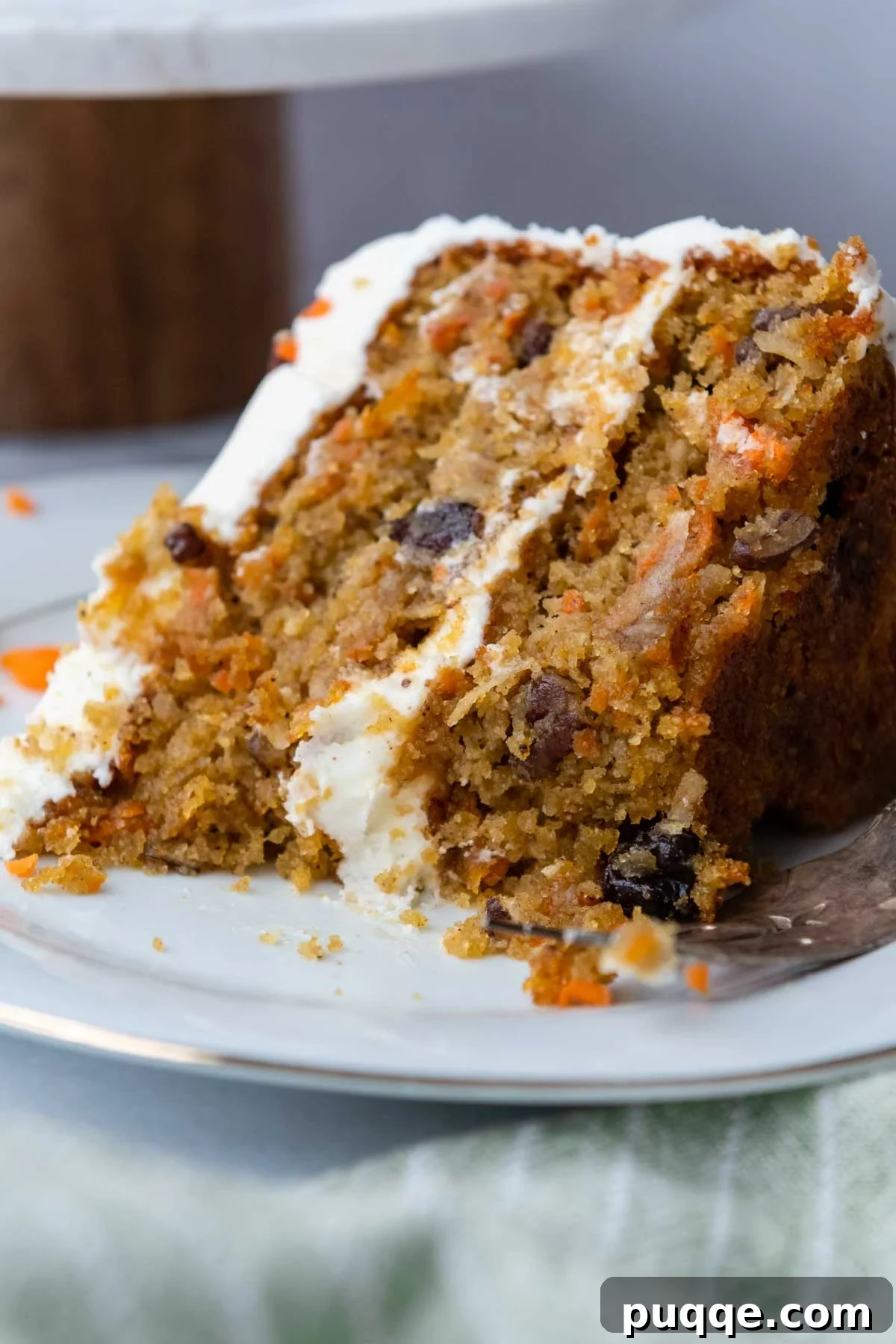
Crafting the Perfect Gluten-Free Carrot Cake with Almond Flour
Almond flour stands as a remarkable alternative for carrot cake, especially for individuals navigating gluten sensitivities, celiac disease, or those simply seeking to avoid traditional wheat or gluten-free flour blends. Its inherent moistness, subtly sweet, and nutty undertones impart a distinctive flavor and tenderness that enhances any baked good. Beyond its health benefits, baking with almond flour brings a delightful complexity to classic recipes.
However, the journey to a perfect almond flour cake isn’t always straightforward. Many recipes, if not meticulously developed and tested, can result in cakes that are unexpectedly dense or heavy. This common pitfall arises because almond flour itself, much like grated carrots, holds a significant amount of moisture. Neglecting to account for this can lead to a less-than-ideal texture.
Our almond flour carrot cake recipe is designed to circumvent these issues, employing complementary ingredients and precise baking techniques to guarantee a cake that is both fluffy and moist. We’ve honed these methods through extensive experience, ensuring every slice is a testament to gluten-free excellence.
One of the foundational tricks involves the preparation of the grated carrots. Before they even touch the cake batter, the carrots are gently pressed in paper towels. This crucial step extracts any excess moisture, preventing the cake from becoming waterlogged and ensuring a balanced, tender crumb. The second key technique, borrowed from professional baking, involves separating the egg whites from the yolks. The whites are beaten to stiff peaks independently and then carefully folded into the batter at the final stage. This aeration process introduces much-needed volume and lightness, counteracting almond flour’s natural density.
This recipe is an absolute triumph! The detailed instructions, especially regarding flour measurement and moisture control, were incredibly helpful. For years after my celiac diagnosis, baking felt like a distant dream, but this recipe is a literal GAME CHANGER! Thank you!
—Beth
These techniques collectively contribute to a cake that boasts a light, ethereal texture, reminiscent of our other highly-regarded recipes like the tender lemony almond flour cake and the perfectly crunchy almond flour biscotti. Continue reading to discover more invaluable, yet simple, tips that will ensure your carrot almond flour cake is a guaranteed success every single time!
Hands down the best carrot cake I have ever made! I’ve baked countless carrot cakes over the years, but never a gluten-free one. I followed this recipe and method precisely, and the result was phenomenal. My friend is GF, and she absolutely loved it. I’ll be using this recipe for everyone from now on – nobody would ever guess it’s gluten-free! It was incredibly moist, soft, and bursting with flavor. Many thanks!
—Trudy
Essential Ingredients for Your Almond Flour Carrot Cake
Understanding the role of each ingredient is paramount to achieving baking success, especially when working with alternative flours. Here’s a closer look at the components that make this almond flour carrot cake truly special:
- Almond Flour: The Foundation of Gluten-Free Baking
For an optimally light and fluffy texture, we highly recommend using sifted blanched almond flour. Blanched almond flour is made from almonds that have had their skins removed before being ground into a fine powder, resulting in a smoother, less dense flour. Almond meal, which includes the skins, tends to be coarser and can lead to a heavier cake. Sifting ensures there are no clumps and contributes to an even, airy crumb, even with almond flour’s naturally high moisture content. Proper storage of almond flour, in an airtight container in the refrigerator or freezer, will also maintain its freshness and prevent it from going rancid. - Carrots: Nature’s Sweetener and Moisture Provider
You’ll need approximately 2 cups of freshly shredded carrots, which usually translates to about 6 medium-sized carrots. The type of carrot matters less than its freshness; opt for firm, vibrant carrots. While a food processor can shred carrots quickly, a traditional box grater often yields a finer, more delicate shred that integrates better into the batter without creating large, chewy pieces. After grating, it’s absolutely crucial to place the carrots in a double layer of paper towels and gently squeeze out the excess moisture. This step is a cornerstone of our almond flour baking philosophy, as it prevents the cake from becoming overly wet and dense. The carrots contribute natural sweetness, essential moisture, and vital structure to the cake. - Sugar: A Balanced Sweetness and Structure Duo
Our recipe calls for a thoughtful combination of brown sugar and granulated sugar. Brown sugar lends a deep, complex caramel flavor and adds extra moisture, contributing to the cake’s rich taste and tender crumb. Granulated sugar, on the other hand, plays a crucial role in providing structure to the cake and promoting even browning. While we haven’t extensively tested this recipe with sugar-free sweeteners, we encourage you to consult the comments section below, where our baking community often shares successful adaptations. - Eggs: The Aeration Powerhouses
For the best possible results, begin by separating the eggs while they are cold. Cold eggs are easier to separate, as their yolks are firmer and less likely to break. Once separated, allow both the whites and yolks to come to room temperature for at least 30 minutes. Room temperature egg whites whip up to a much greater volume, creating more stable and voluminous peaks. Similarly, room temperature egg yolks emulsify more effectively with other ingredients, leading to a smoother, more uniform batter. Beating the egg whites separately and folding them in at the end is a tried-and-true technique, also used in recipes like our almond flour apple cake, to lighten the crumb and achieve that desired airy texture. - Spices: The Soul of Carrot Cake
To capture that beloved, classic carrot cake flavor, just like homemade, we use a robust blend of ground cinnamon, cloves, ginger, and nutmeg. This combination creates a warm, aromatic, and comforting profile. If you happen to have it on hand, a small dash of ground cardamom would also be a beautiful addition, offering a subtle, floral note that complements the other spices wonderfully. - Oil: For Ultimate Moisture and Dairy-Free Goodness
This recipe embraces the use of oil instead of butter, which not only contributes to an incredibly moist cake but also makes it naturally dairy-free. You can use any preferred neutral-flavored oil, such as vegetable oil, canola oil, or melted and cooled coconut oil. Oil disperses more evenly throughout the batter and contributes to a tender texture that stays moist for longer periods. - Mix-Ins: Enhancing Flavor, Texture, and Volume
A delightful combination of nuts, shredded coconut, and raisins not only replicates that cherished homemade, old-fashioned carrot cake flavor but also adds essential bulk and texture to the cake layers. We recommend using either pecans or walnuts for a satisfying crunch, and you can choose between regular or golden raisins for varying degrees of sweetness and chewiness. While you may certainly omit any of these mix-ins based on preference, be aware that doing so may result in slightly thinner cake layers. The mix-ins are key to the cake’s rustic charm and substantial feel.
Let’s Bake This Together!
(The following provides step-by-step photos and detailed instructions. For the complete recipe, including precise ingredient amounts and nutritional information, please scroll down to the recipe card.)
Step 1: Prep Ingredients and Beat Egg Whites
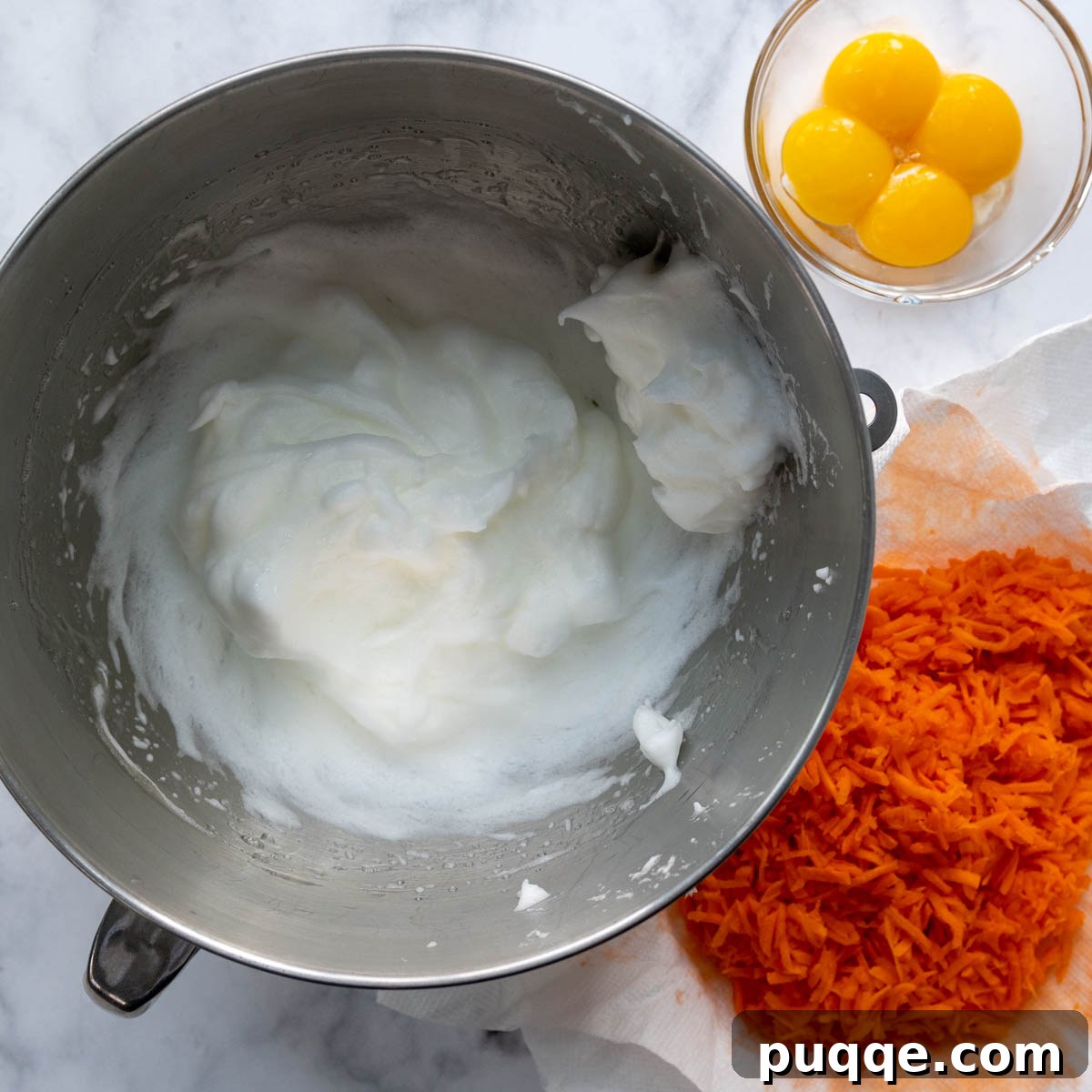
Begin by grating your carrots. Once shredded, place them in a double layer of paper towels and gently squeeze to remove any excess moisture. This critical step, often overlooked in almond flour desserts, prevents a dense cake. Set the carrots aside. Next, prepare two 8-inch cake pans by greasing them thoroughly with nonstick spray. Line the bottoms with parchment paper cut to size, then spray the parchment as well for extra insurance against sticking.
In a large, impeccably clean mixing bowl or the bowl of a stand mixer, add the separated egg whites. Using the whisk attachment, beat the egg whites on high speed until very stiff, glossy peaks form. This means when you lift the whisk, the peaks hold their shape without drooping. Carefully transfer these beaten egg whites to a separate bowl; they will be gently folded into the cake batter later to achieve ultimate lightness.
Step 2: Cream the Egg Yolks and Sugars
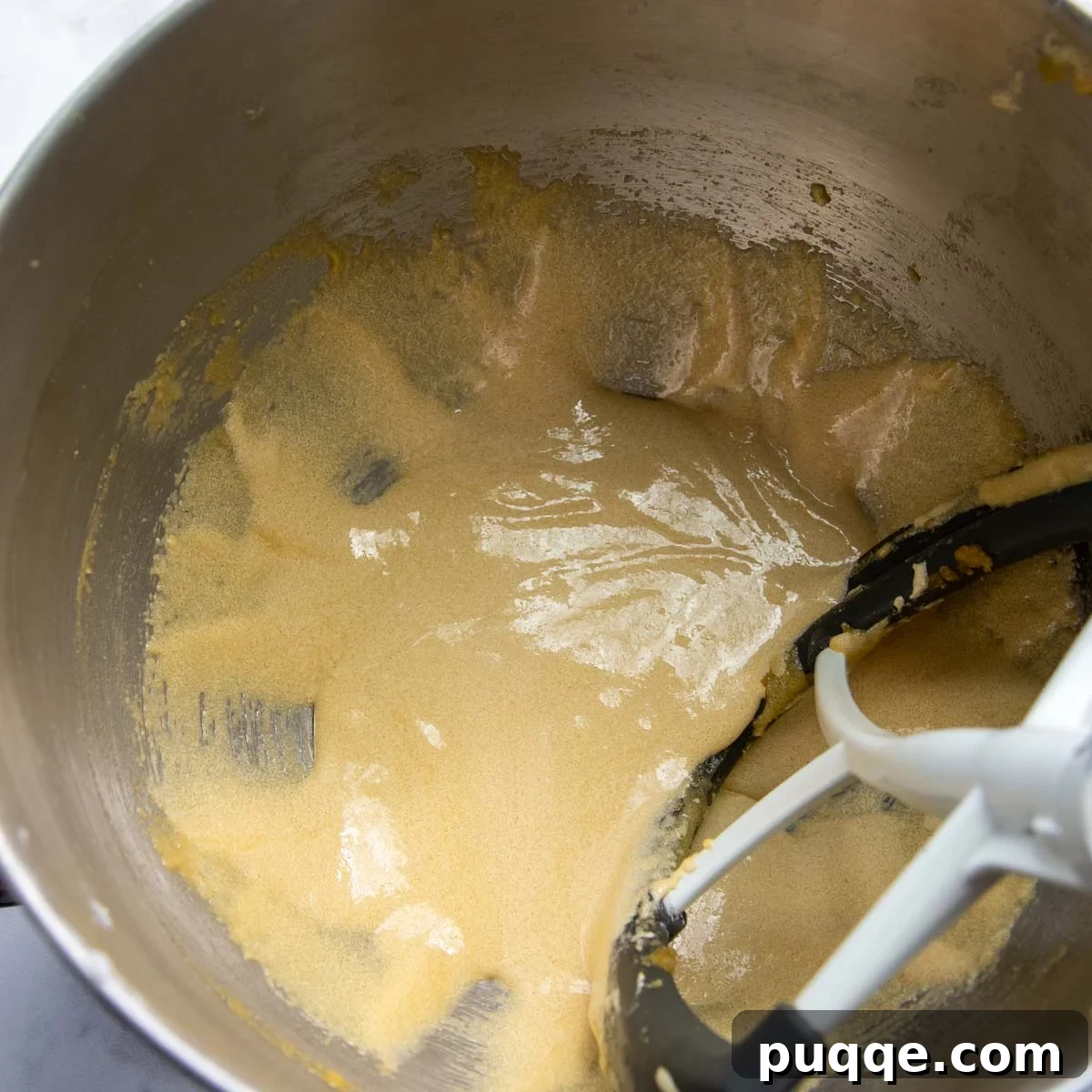
Using the same mixing bowl (no need to wash if you beat the whites first), add the egg yolks, light brown sugar, and granulated sugar. If using a stand mixer, switch to the paddle attachment. Beat this mixture on medium-high speed for approximately 3 minutes, or until the mixture has visibly doubled in volume and transformed into a pale, creamy consistency. This creaming process incorporates air and creates a stable base for your batter.
Step 3: Build the Flavorful Cake Batter
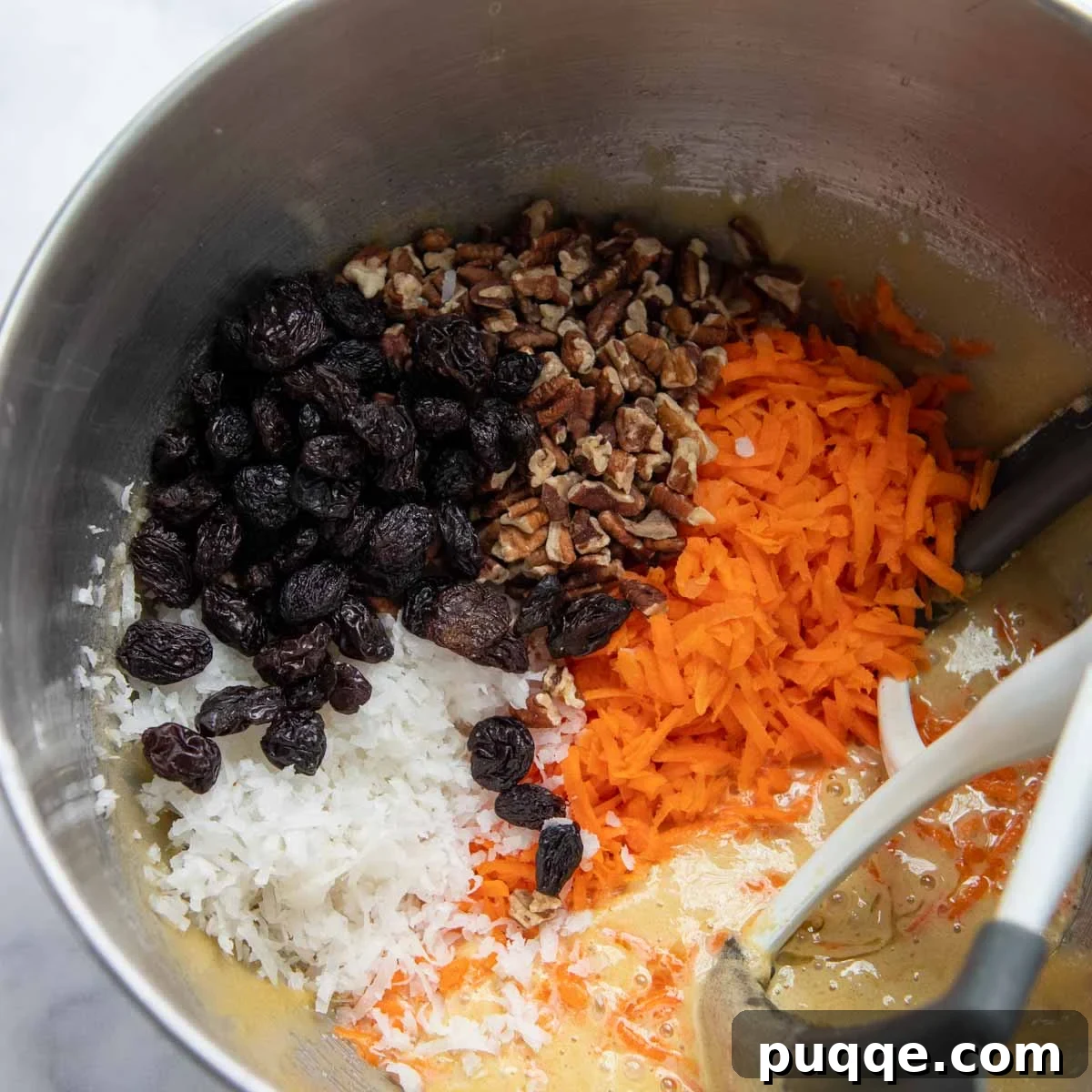
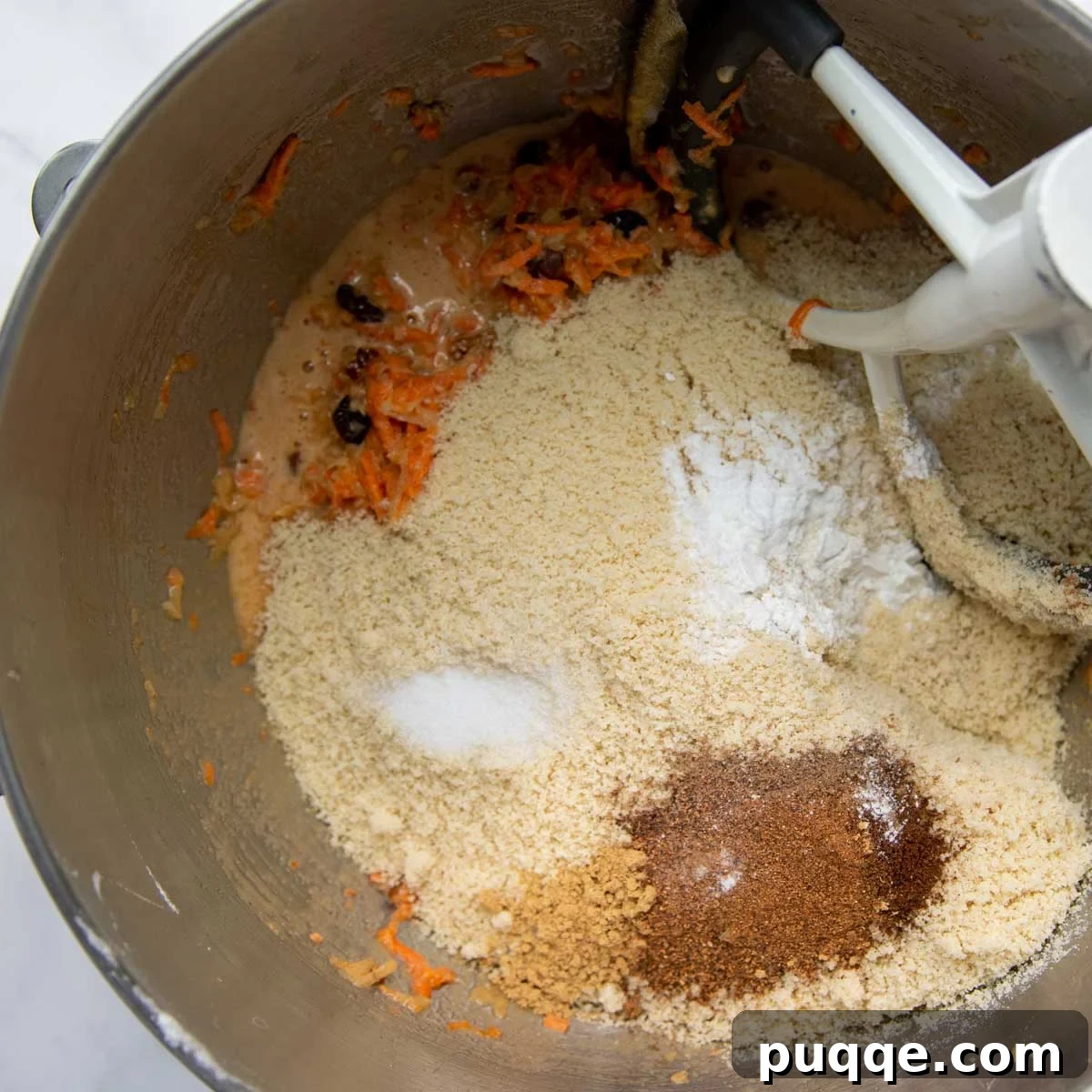
To the creamed yolk mixture, add the remaining wet ingredients: the oil and vanilla extract. Beat until thoroughly combined, ensuring everything is well integrated. Next, stir in the prepared carrots, chopped nuts (pecans or walnuts), shredded coconut, and raisins. Mix gently until these delightful add-ins are evenly distributed throughout the batter. Now, it’s time for the dry ingredients: gradually add the blanched almond flour, baking powder, baking soda, aromatic spices, and salt. Mix on the lowest speed until just combined. Be careful not to overmix at this stage. You’ll notice the batter will be quite thick; this is perfectly normal for almond flour cakes.
Step 4: Incorporate Air and Bake to Perfection
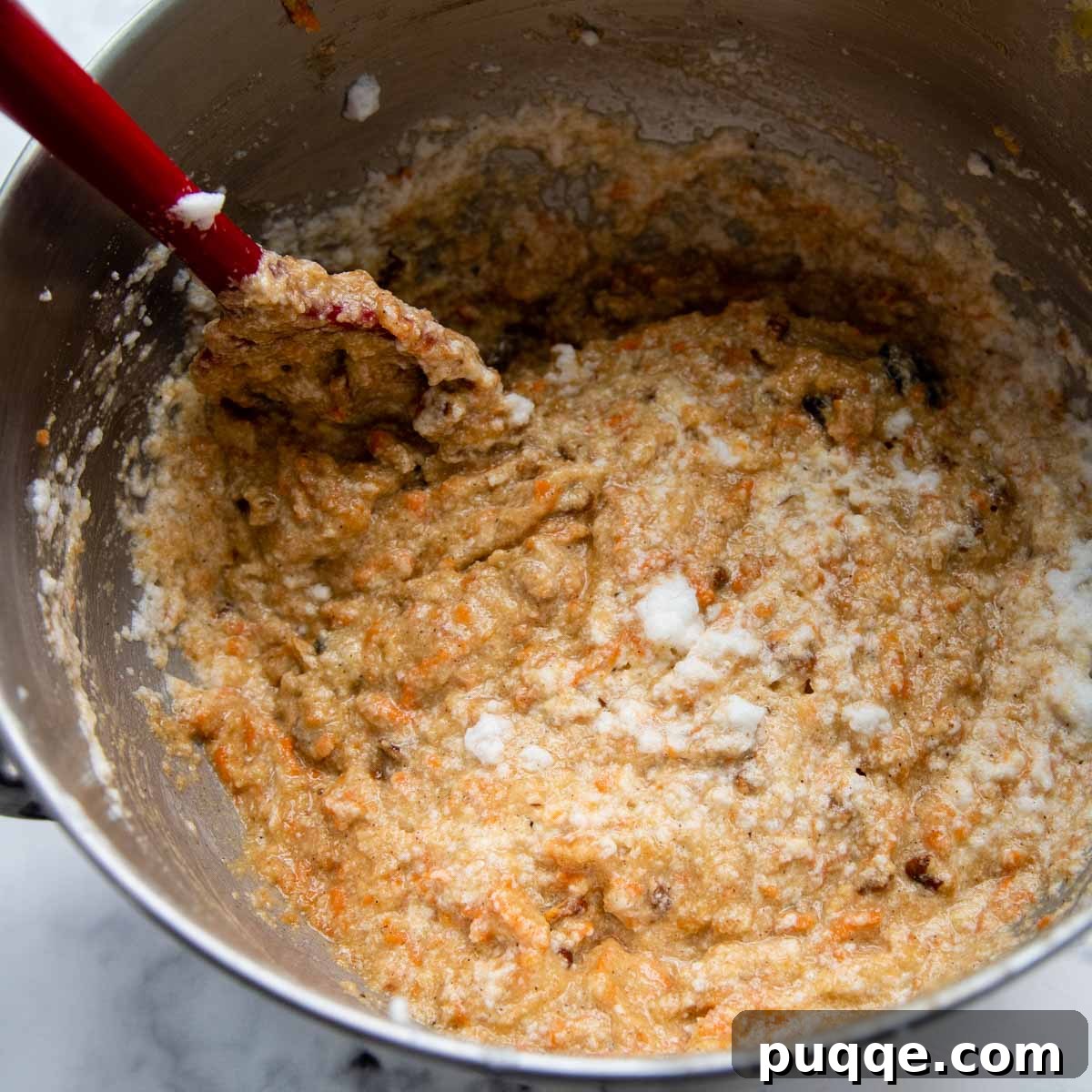
The final step in creating a light, airy cake is to incorporate the beaten egg whites. Start by gently folding in about one-third of the egg whites into the thick batter. This initial addition helps to aerate and loosen the batter, making it easier to incorporate the rest without deflating the delicate egg whites. Once partially combined, add the remaining egg whites. Using a large silicone spoon or spatula, gently fold from the sides of the bowl into the middle, rotating the bowl as you go. Take your time with this step, being careful not to overmix, as the goal is to retain as much air as possible for the best fluffy results!
Evenly divide the aerated cake batter between your prepared cake pans. Bake in a preheated oven for 35-40 minutes. To test for doneness, the center of the cake should feel set when lightly touched, and a toothpick or cake tester inserted into the middle should come out clean. Once baked, allow the cakes to cool in their pans for 5 minutes before carefully inverting them onto a wire rack to cool completely. Ensure the cakes are entirely cool before moving on to the delicious cream cheese frosting.
The Ultimate Fluffy Cream Cheese Frosting
No carrot cake is truly complete without the classic, tangy embrace of a luscious cream cheese frosting. It’s the perfect complement, especially when serving this delightful dessert for festive occasions like Easter or any special gathering. Our recipe includes instructions for a wonderfully fluffy, buttery, and perfectly tangy cream cheese frosting that elevates every bite.
However, we understand the need for adaptability. Since the almond flour carrot cake layers are inherently gluten-free and can easily be made dairy-free (by using oil instead of butter in the cake), you might be seeking a non-dairy frosting option to pair with it. For those adhering to a dairy-free diet, consider a coconut whipped cream frosting for a lighter, equally delicious alternative. Alternatively, you can adapt our traditional cream cheese frosting by substituting dairy-free cream cheese and vegan butter, ensuring everyone can enjoy this heavenly dessert.
Expert Tips for Baking with Almond Flour in Cakes
While some grain-free baking recipes, such as an easy press-in almond flour pie crust, might be relatively straightforward in their preparation, baking cakes with almond flour requires a more nuanced approach. Almond flour behaves differently than wheat flour, primarily due to its higher fat content and lack of gluten. This can often lead to a denser texture if not properly managed. While the crumb of an almond flour cake won’t exactly mimic traditional gluten-containing cakes, these simple, professional tricks will help you get remarkably close to that desired texture and flavor:
- Mindful Moisture Management: Almond flour is rich in healthy fats and naturally retains a lot of moisture. To prevent an overly dense or gummy cake, our recipe uses only a minimal amount of oil. Furthermore, opting for granulated sugars over liquid sweeteners like maple syrup helps significantly reduce the overall moisture content in the batter, creating a lighter final product.
- Precise Almond Flour Measurement: Accurate measurement is critical for almond flour. Unlike wheat flour, which can be spooned and leveled without much thought, almond flour is heavier and more prone to compression. Always measure almond flour by spooning it lightly into the measuring cup and then leveling off the top with a straight edge. Never scoop directly from the bag or pack it down, as this will result in too much flour, throwing off your ingredient ratios and leading to a dry, dense cake.
- The Power of Separately Beaten Egg Whites: This technique is a game-changer for almond flour cakes. Beating egg whites to stiff peaks before incorporating them into the batter significantly bulks up the cake layers and adds substantial volume. This extra air acts as a natural leavener, preventing the cake from becoming condensed and heavy.
- The Art of Gentle Folding: Once the egg whites are beaten, they must be folded into the batter with extreme care. Gently folding the whites into the thicker batter, rather than vigorously mixing, helps to preserve the delicate air bubbles you’ve worked so hard to create. This aeration process is similar to how soufflés achieve their incredible lightness, resulting in a cake with an incredibly tender and airy texture.
- Don’t Overmix the Batter: After adding the dry ingredients, mix only until just combined. Overmixing gluten-free flours, including almond flour, can still lead to a tough cake, even without gluten development. Gently does it!
- Know Your Oven: Every oven can vary slightly in temperature. Using an oven thermometer can help ensure your oven is preheating to the correct temperature, which is vital for consistent baking results with almond flour.
Cake Pan Size, Modifications, and Troubleshooting
Baking cakes often involves adapting to the tools you have on hand or modifying a recipe to suit specific serving needs. While our recipe is optimized for 8-inch cake pans, here’s how to navigate common adjustments:
Cake Pan Size:
- 8-inch Cake Pans (Recommended): This recipe is specifically developed for two 8-inch round cake pans. This size ensures beautifully thick, tall cake layers, contributing to the overall impressive presentation and satisfying texture.
- 9-inch Cake Pans: While 9-inch cake pans are more widely available, they will result in slightly thinner cake layers due to the increased surface area. If you opt for 9-inch pans, reduce the baking time by approximately 5-10 minutes and keep a close eye on the cakes to prevent over-baking.
- 9×13-inch Pan (Sheet Cake): To transform this into a single-layer sheet cake using a 9×13-inch pan, you will need to scale the recipe up. A 9×13-inch pan is roughly equivalent to 1 and 1/2 times the volume of two 8-inch pans. For precise ingredient adjustments, simply locate the recipe card below and use the servings slider to adjust to 15 servings; the ingredient amounts will automatically update. You will also need to increase the baking time by 5-10 minutes for a thicker single layer.
Troubleshooting Common Almond Flour Cake Issues:
- Cake is too dense or heavy: This is often due to too much moisture or insufficient aeration. Double-check that you thoroughly squeezed excess liquid from the grated carrots and that your egg whites were beaten to stiff peaks and gently folded in. Ensure you measured almond flour correctly by spooning and leveling, not packing.
- Cake didn’t rise enough: Make sure your baking powder and baking soda are fresh. Also, ensure your egg whites were beaten to firm peaks, as they are crucial for lift in this gluten-free recipe.
- Cake is dry: While less common with almond flour, a dry cake can happen if it’s overbaked. Keep an eye on the baking time and rely on the toothpick test for doneness.
Save This Delectable Recipe to Your Pinterest Board!
Let’s be friends on Pinterest! I’m always sharing great recipes and baking inspiration!
Did you bake this incredible carrot cake? I truly love hearing from you and seeing your creations! Please leave a star rating and comment below the recipe card. Your feedback is invaluable, helping others discover and enjoy this recipe, and I promise to always respond! -Melissa
Gluten-Free Almond Flour Carrot Cake (Moist, Fluffy)
 Melissa Erdelac
Pin
Rate
Remove Ads
Ingredients
- 2 cups (232 g) grated carrots, I recommend using a box grater, rather than food processor.
- 4 large eggs, separated
- ¾ cup (176 g) packed light brown sugar
- ½ cup (100 g) granulated sugar
- 2 teaspoons vanilla extract
- ½ cup (109 g) oil, vegetable, canola or coconut
- ¾ cup (94 g) chopped pecans
- ¾ cup (64 g) shredded coconut
- ½ cup (85 g) raisins
- 3 ½ cups (346 g) blanched almond flour
- 1 ½ teaspoon baking powder
- ½ teaspoon baking soda
- ½ teaspoon salt
- 1½ teaspoon ground cinnamon
- ½ teaspoon ground cloves
- ½ teaspoon ground ginger
- ½ teaspoon ground nutmeg
Cream Cheese Frosting
- 8 ounce (226 g) cream cheese, room temperature
- ½ cup (113 g) butter, softened
- 3 cups (360 g) powdered sugar
- 1 teaspoon vanilla extract
- ¼ teaspoon salt
- 1 tablespoon heavy cream, half and half, or milk
- optional: additional grated carrots or nuts, for decorating
Equipment
-
8 inch cake pans
-
Stand Mixer
-
Offset Spatula
Instructions
-
Preheat your oven to 350ºF (175ºC). Generously grease two 8-inch cake pans with nonstick cooking spray. Line the bottoms of the pans with cut-to-size parchment paper, then spray the parchment paper as well to ensure easy release.
-
Grate the carrots and place them in a double layer of paper towels. Gently squeeze the paper towels to remove any excess moisture from the carrots. This step is essential for the cake’s texture. Set the squeezed carrots aside.2 cups (232 g) grated carrots
-
In a large, clean mixing bowl or the bowl of a stand mixer, add the separated egg whites. Using the whisk attachment, beat on high speed until very stiff peaks form. Transfer the beaten egg whites to a separate bowl and set aside.4 large eggs
-
Using the same empty mixing bowl (no need to clean), add the egg yolks, light brown sugar, and granulated sugar. If using a stand mixer, switch to the paddle attachment. Beat for 3 minutes on medium-high speed, or until the mixture is light, pale, and has doubled in volume.¾ cup (176 g) packed light brown sugar, ½ cup (100 g) granulated sugar
-
Add the oil and vanilla extract to the yolk mixture and beat until well combined. Then, mix in the prepared grated carrots, chopped pecans, shredded coconut, and raisins until evenly distributed.2 teaspoons vanilla extract, ½ cup (109 g) oil, ¾ cup (94 g) chopped pecans, ¾ cup (64 g) shredded coconut, ½ cup (85 g) raisins
-
To the wet mixture, add the dry ingredients: blanched almond flour, baking powder, baking soda, salt, ground cinnamon, ground cloves, ground ginger, and ground nutmeg. Mix on low speed until just combined. Be careful not to overmix. At this point, the batter will be quite thick.3 ½ cups (346 g) blanched almond flour, 1 ½ teaspoon baking powder, ½ teaspoon baking soda, ½ teaspoon salt, 1½ teaspoon ground cinnamon, ½ teaspoon ground cloves, ½ teaspoon ground ginger, ½ teaspoon ground nutmeg
-
Carefully fold in one-third of the beaten egg whites into the thick batter to gently aerate and loosen it. Once partially combined, add the remaining egg whites. Use a large silicone spoon or spatula to gently fold from the sides of the bowl into the middle, rotating the bowl as you go. Be patient and take your time with this step to maintain the airiness for the best fluffy results!
-
Evenly divide the cake batter between the two prepared cake pans. Bake for 35-40 minutes. The cakes are done when the middle feels set when lightly touched, and a toothpick or cake tester inserted into the center comes out clean.
-
Allow the cakes to cool in their pans for 5 minutes before carefully inverting them onto a wire rack to cool completely. Ensure the cake layers are entirely cool before applying any frosting.
Cream Cheese Frosting
-
In a large mixing bowl, combine the room temperature cream cheese and softened butter. Beat on high speed until the mixture is smooth and well combined, with no lumps. Gradually add the powdered sugar, vanilla extract, salt, and heavy cream (or half and half/milk). Mix on low speed initially to combine the ingredients without creating a sugar cloud, then increase to high speed and beat for 2-3 minutes until the frosting is light, fluffy, and perfectly smooth.8 ounce (226 g) cream cheese, ½ cup (113 g) butter, 3 cups (360 g) powdered sugar, 1 teaspoon vanilla extract, ¼ teaspoon salt, 1 tablespoon heavy cream, half and half, or milk
-
Once the cake layers are completely cool, gently remove them from the wire rack. Place one cake layer onto your serving platter. Spoon a generous, thick layer of frosting onto the center of the cake, then use an offset spatula to spread it evenly to the edges.
-
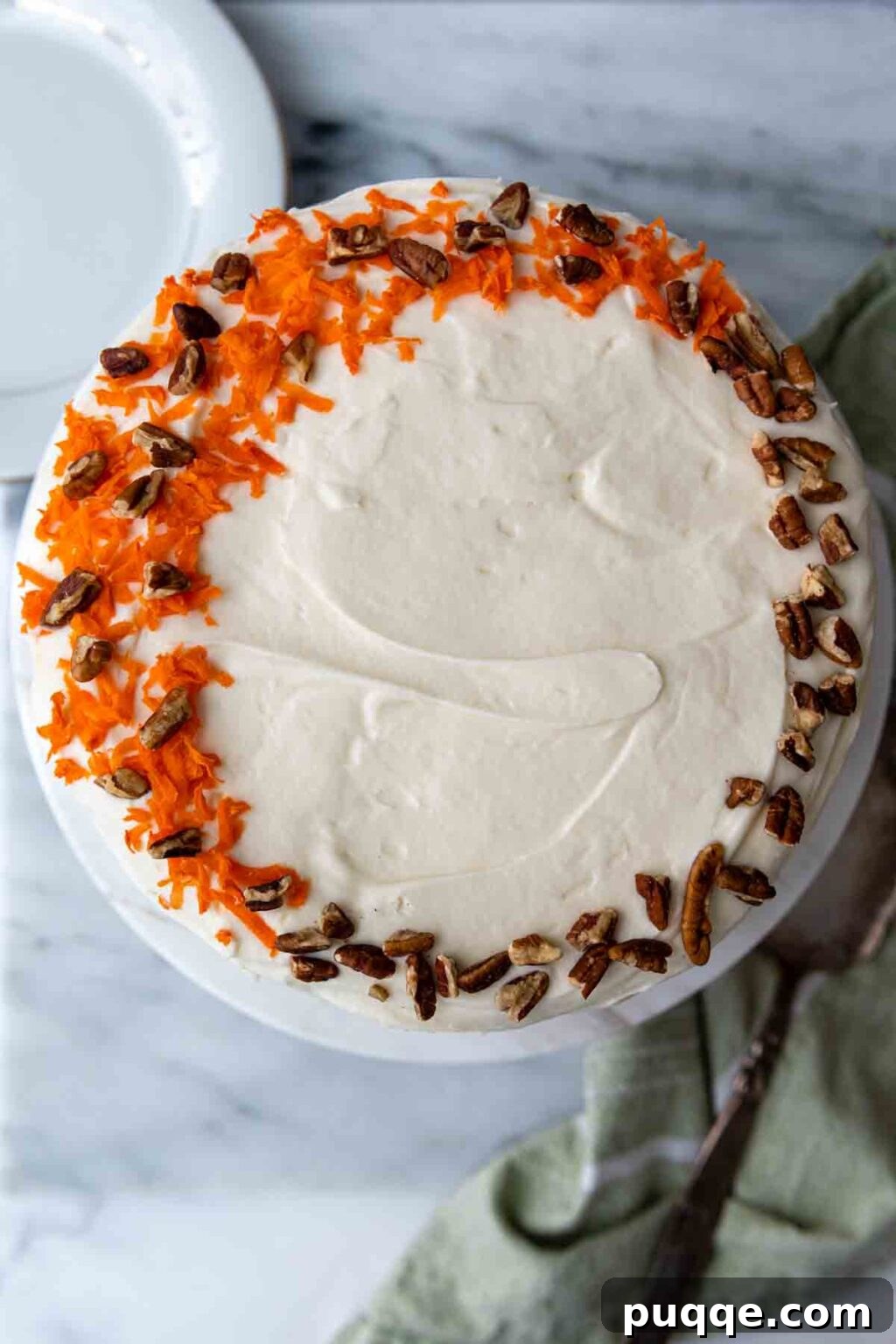
Carefully place the second cake layer on top of the first. Spoon the remaining frosting onto the top and around the sides of the entire cake. Use the offset spatula to spread the frosting smoothly and evenly. For an extra touch of decoration, you may garnish with additional grated carrots or chopped nuts, if desired.
-
For the cleanest and most intact slices, it is highly recommended to refrigerate the frosted cake for at least 1 hour before slicing and serving. This allows the frosting to firm up. Store any leftovers in an airtight container in the refrigerator.
Notes
Key Tips for Success
- For easier separation and maximum volume, separate egg whites from yolks while the eggs are cold, then allow both to come to room temperature before beating.
- Using two 8-inch cake pans will yield perfectly fluffy, thick cake layers. If you only have 9-inch pans, your cake layers will be slightly thinner, and you should reduce the baking time by 5-10 minutes.
- Always measure almond flour by spooning it into the measuring cup and leveling it off. Never pack it down, as this will result in a denser cake.
- The addition of nuts, shredded coconut, and raisins not only enhances flavor and texture but also adds significant bulk to the cake layers. You can omit any of these mix-ins, but be aware that the resulting cake layers may not be as thick.
- Cake layers can sometimes stick to wire racks. To prevent this, either try to slide them onto the rack top-side up or lightly spray your cooling racks with nonstick spray beforehand.
- Refrigerate the assembled and frosted cake for at least 1 hour before slicing and serving. This allows the frosting to set, making it much easier to cut clean, beautiful slices.
Storage and Serving Suggestions
To keep your delicious Almond Flour Carrot Cake fresh and at its best, proper storage is key. Once frosted, the cake should be stored in an airtight container in the refrigerator. The cream cheese frosting, in particular, requires refrigeration. Stored correctly, the cake will remain wonderfully moist and flavorful for up to 3-4 days. For optimal taste and texture, allow the cake to come to room temperature for about 30 minutes before serving. This softens the frosting and enhances the cake’s delicate texture and aromatic spices.
When ready to serve, using a warm knife can help you achieve clean, neat slices. Simply run a sharp knife under hot water, wipe it dry, and then slice. Repeat for each cut. This little trick makes a big difference in presentation. This cake is perfect on its own, but a light dusting of cinnamon or a few extra chopped pecans on each slice can add a beautiful finishing touch. Enjoy this extraordinary gluten-free treat!
Conclusion: Your Best Almond Flour Carrot Cake Awaits
Baking a truly exceptional gluten-free carrot cake with almond flour is not just possible, it’s an incredibly rewarding experience with this recipe. By understanding the unique properties of almond flour and employing these carefully honed techniques—from managing moisture in the carrots to aerating the batter with beaten egg whites—you can achieve a cake that is remarkably moist, irresistibly fluffy, and bursting with classic, warm spices. This recipe is designed to take the guesswork out of gluten-free baking, offering clear steps and expert insights to ensure your success.
Whether you’re baking for dietary needs or simply seeking a deliciously unique take on a beloved classic, this almond flour carrot cake is sure to become a cherished addition to your recipe collection. Gather your ingredients, follow our pro tips, and prepare to impress your friends and family with a dessert that’s both wholesome and utterly decadent. Happy baking!